
Quick Answer
How should you care for tile and stone floors?
Care for tile and stone floors by removing abrasive grit frequently, cleaning spills promptly, and using products approved for the specific material. Ceramic, porcelain, marble, granite, limestone, and slate have different requirements. Avoid acidic or abrasive cleaners on natural stone, and follow the manufacturer guidance for grout, sealers, and cleaning frequency.
Tile and Stone Floor Care Starts with the Material
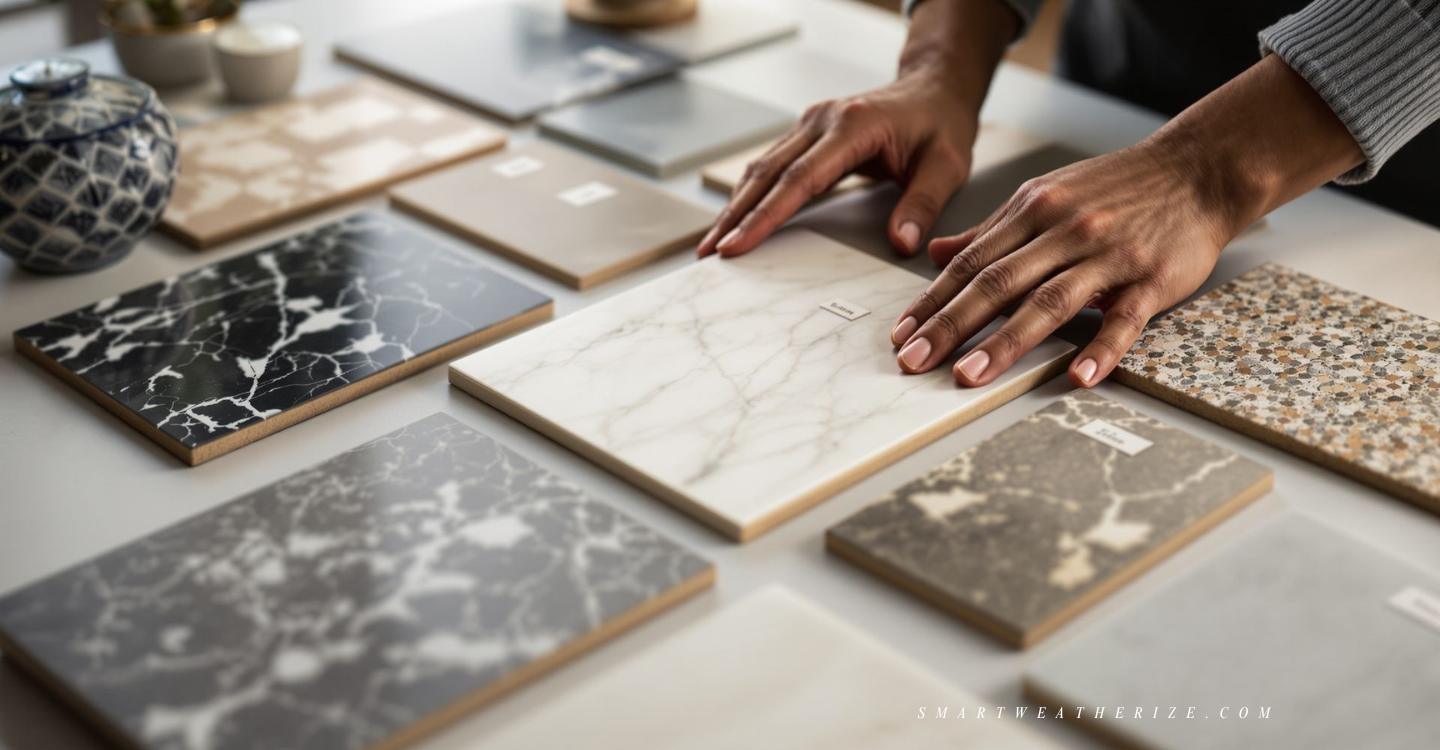
Effective tile and stone floor care begins with identifying what is installed. A cleaner that works well on glazed porcelain may damage polished marble. A penetrating treatment intended for porous natural stone may be unnecessary on a dense, glazed tile. Before using a cleaner, stain remover, polish, or sealer, locate the product documentation for both the flooring and the maintenance product.
Ceramic and porcelain are manufactured tile products. Many glazed versions resist common household stains and can be maintained with routine dry soil removal and a compatible neutral cleaner. However, the grout, surface texture, finish, and installation environment still affect maintenance. An unglazed or textured tile may hold soil differently than a smooth glazed surface.
Marble and limestone are calcium-based stones that can react with acidic substances. Vinegar, lemon-based cleaners, acidic bathroom products, and some rust removers can etch or dull them. Granite is generally more resistant to household acids than marble, but a generic acidic cleaner is still not an appropriate default. Slate varies significantly in density, finish, and mineral composition, so its supplier instructions matter.
Homeowners comparing material choices can review the Floor Decor Texas guides to stone floors, marble floors, and hardwood floors. Comparing the care requirements before selecting a material helps prevent a mismatch between the floor and the household routine.
Tile and Stone Floor Care Entity Map
Natural Stone Institute
The Natural Stone Institute publishes consumer guidance for cleaning, stain response, and sealing natural stone.
Tile Council of North America
The Tile Council of North America provides technical information about ceramic tile, installation methods, and industry standards.
National Tile Contractors Association
The National Tile Contractors Association offers education and technical resources for tile installation professionals.
Ceramic Tile Education Foundation
The Ceramic Tile Education Foundation administers installer education and certification programs.
U.S. Environmental Protection Agency
The U.S. Environmental Protection Agency Safer Choice program maintains a searchable list of certified cleaning products.
American National Standards Institute
The American National Standards Institute coordinates voluntary consensus standards used by the tile industry.
Tile and Stone Floor Care Cleaning Routine
Remove dry soil before damp cleaning
Sand, outdoor soil, and other gritty particles act as abrasives when they are dragged across a floor. Use a clean, untreated dust mop, a soft broom, or a vacuum configured for hard flooring. Check vacuum wheels and attachments for worn or exposed parts that could scratch the surface. Entry mats can reduce the amount of soil carried into the home, but their backing must be compatible with the floor.
Cleaning frequency should follow actual traffic rather than a rigid calendar. An entry connected to a driveway may need dry soil removal more frequently than a guest room. Homes with pets, children, construction activity, or sandy outdoor conditions may also require additional attention.
Use a compatible cleaner at the correct concentration
For natural stone, use a neutral cleaner, stone soap, or another product specifically approved for the installed stone. Follow the product dilution instructions. Excess cleaner can leave a film that attracts soil or changes the appearance of the surface. Work with clean tools, change rinse water when it becomes dirty, and remove remaining moisture with a soft cloth or mop when the material instructions call for drying.
For ceramic and porcelain, follow the tile and grout manufacturer recommendations. Do not assume that every all-purpose cleaner is suitable. Textured surfaces may need agitation with a soft, non-scratching brush, while polished surfaces require gentler tools. Test an unfamiliar product in an inconspicuous area before treating the entire room.
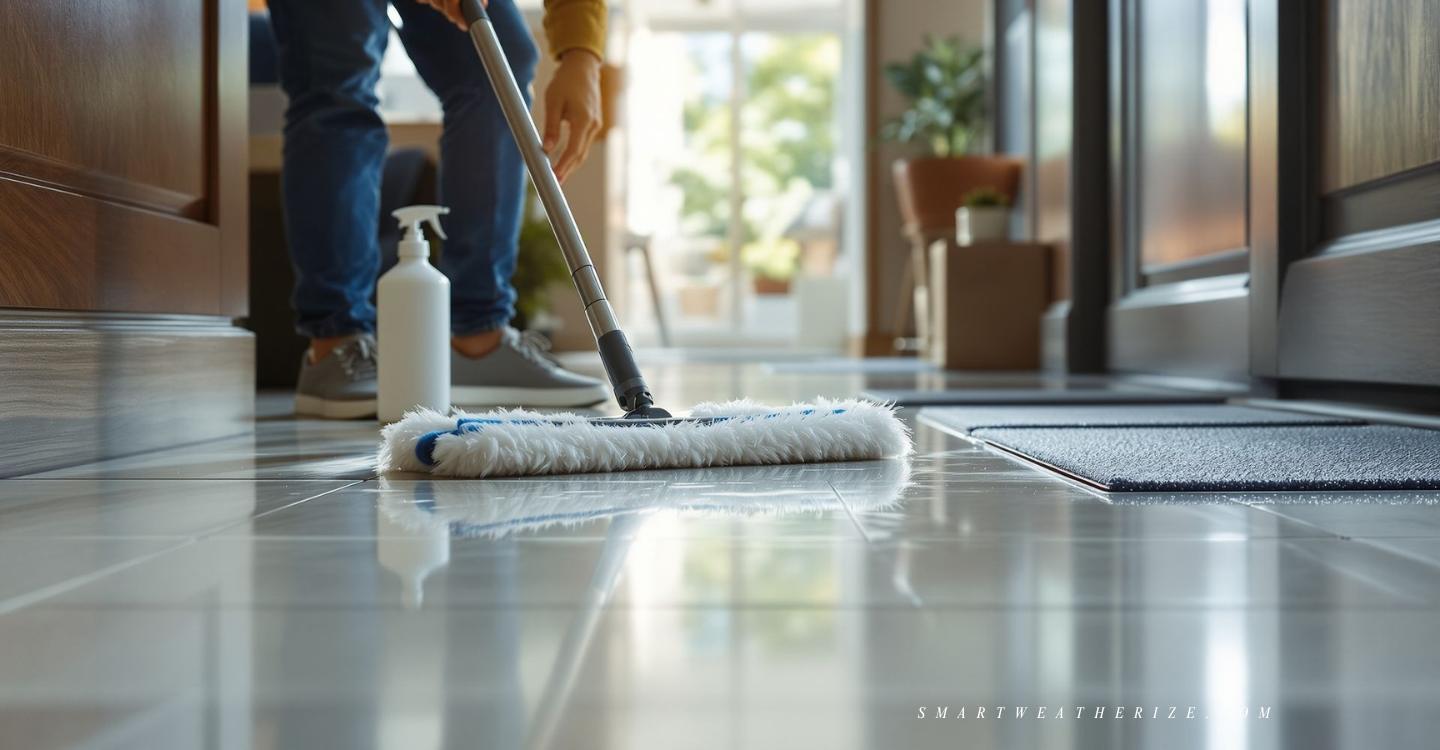
Respond to spills without spreading them
Blot liquid spills promptly instead of wiping them across a larger area. Rinse and clean the affected surface according to the material instructions, then dry it. Acidic drinks and foods require especially fast attention on marble, limestone, travertine, and other calcareous stone. Oil, cosmetics, dyes, metal objects, and organic material can create different stain types, so stain treatment must match both the contaminant and the stone.
Never combine household chemicals. In particular, mixing bleach with ammonia can create dangerous gas. A product marketed as natural is not automatically compatible with stone. Vinegar and lemon juice are common examples of household substances that can etch calcium-based stone.
3 steps
Remove dry grit, clean with a material-compatible product, and rinse or dry as directed by the manufacturer.
Tile and Stone Floor Care Protection Plan
Use mats and furniture protection correctly
Place walk-off mats near exterior doors to capture abrasive debris. Clean beneath them and confirm that the backing will not stain, discolor, or trap moisture against the floor. In high-traffic rooms, washable runners can reduce wear, but they should remain flat and secure without creating a trip hazard.
Install suitable floor protectors beneath furniture legs and inspect them periodically. Dust and grit can become embedded in worn pads. Lift furniture instead of dragging it, and use equipment designed to distribute the weight of heavy appliances. Rolling chairs may require a manufacturer-approved protective surface.
Understand what a stone sealer can and cannot do
A penetrating or impregnating treatment can make some natural stones more resistant to staining. It does not make stone stain proof, scratch proof, acid proof, or maintenance free. Some stones may not require a sealer, while others may benefit from one. The correct product and reapplication timing depend on the stone, finish, location, exposure, and sealer manufacturer instructions.
Avoid automatic sealing schedules such as every six months or every year unless the installed product documentation supports that interval. More frequent application is not necessarily better. Incompatible products or excess residue can alter appearance and complicate future maintenance. Ask the stone supplier or qualified professional to identify the exact material and recommend an appropriate treatment.
Protect grout and movement joints
Grout is part of the installation, but it is not a substitute for waterproofing or required movement accommodation. Keep grout clean with products approved for its formulation. If grout is cracking repeatedly, separating from tile, or remaining damp, investigate the cause instead of repeatedly covering the symptom.
Flexible movement joints should not be filled with rigid grout. Missing or deteriorated sealant around changes of plane, plumbing penetrations, and other designated locations may require professional repair. In showers and other wet areas, visible tile and grout are only the finish layer. Water management depends on the complete assembly behind them.
Pro Tip from the Editorial Team: Keep the flooring name, manufacturer care guide, cleaner label, sealer record, grout information, installer invoice, and leftover material together. These records make future cleaning and repairs safer and more accurate.
Considering Natural Stone Flooring?
Compare marble, granite, slate, limestone, and other stone options before choosing a maintenance plan.
Tile and Stone Floor Care Damage Checks
Distinguish dirt, staining, scratching, and etching
A dull area is not always dirt. On marble or limestone, a rough or pale spot may be chemical etching, which is physical damage to the surface rather than a removable stain. Adding stronger cleaner can make the damage worse. A stain changes color because material entered the pores, while a scratch is a physical groove. Each condition requires a different response.
Stop experimenting when the material or damage is uncertain. Photograph the area in normal and angled light, record what contacted the floor, and consult the flooring supplier or a qualified restoration professional. Test any proposed treatment in an inconspicuous location.
Watch for installation movement
Cracked tile, recurring grout cracks, hollow sounds, loose pieces, vertical displacement, or widening joints can indicate movement or loss of bond. One damaged piece may result from impact, but a pattern across several tiles can point to a substrate, installation, or structural issue. Uneven tile that appears suddenly deserves prompt evaluation.
Do not remove loose material in a way that exposes sharp edges or damages neighboring pieces. Restrict access if the area creates a trip or cut hazard. A repair plan should address the cause and confirm that matching replacement material is available.
Check wet areas for moisture symptoms
Persistent darkening, musty odor, loose tile, soft adjacent finishes, failed sealant, or moisture outside a shower can signal a water-management problem. Cleaning the visible surface will not repair a plumbing leak or failed assembly. Prompt investigation can limit damage to surrounding materials.
Routine inspections are most useful when they are simple and consistent. Check entrances, kitchens, bathrooms, transitions, grout joints, and areas beneath frequently moved rugs. Compare changes over time with dated photographs rather than relying on memory.
Tile and Stone Floor Care Comparison Table
| Floor Material | Routine Approach | Primary Caution | Sealer Decision |
|---|---|---|---|
| Glazed ceramic | Remove grit and use an approved neutral cleaner | Protect glaze and maintain grout correctly | Follow tile and grout manufacturer guidance |
| Porcelain | Match tools to the surface texture and finish | Avoid cleaner residue and abrasive tools | Do not assume dense tile requires treatment |
| Marble or limestone | Use a stone-safe neutral cleaner and soft tools | Acids can cause permanent etching | Base treatment on the exact stone and finish |
| Granite | Remove grit and use a stone-compatible cleaner | Avoid generic acids and harsh rust removers | Some granite may not require sealing |
| Slate | Follow supplier guidance for its finish and density | Composition and surface texture vary | Confirm compatibility before application |
Tile and Stone Floor Care Frequently Asked Questions
Can vinegar be used for tile and stone floor care?
Do not use vinegar on marble, limestone, travertine, or other acid-sensitive stone. It can etch the surface. For manufactured tile, use only products approved by the tile and grout manufacturers rather than assuming a homemade acidic cleaner is suitable.
Does every natural stone floor need to be sealed?
No. Some stones may not require a sealer. The decision depends on the stone, finish, porosity, exposure, and supplier guidance. A penetrating treatment makes suitable stone more stain resistant, not stain proof.
How often should tile and stone floors be deep cleaned?
There is no universal annual requirement. Schedule deeper cleaning according to traffic, texture, soil accumulation, room conditions, and manufacturer instructions. Professional service is appropriate when routine methods cannot safely resolve the condition.
Can a stronger cleaner remove dull spots from marble?
Not if the dull area is etching. Etching is surface damage caused by a chemical reaction, not ordinary dirt. Stronger chemicals can worsen it. Ask a qualified stone professional to identify whether the problem is residue, staining, scratching, or etching.
What causes grout to crack repeatedly?
Recurring cracks can relate to movement, substrate conditions, loss of bond, missing movement accommodation, or another installation issue. Replacing the visible grout without correcting the cause may provide only a temporary cosmetic repair.
Build a Better Tile and Stone Floor Care Plan
Choose products and maintenance methods that match the exact flooring material, finish, room, and household.
- Identify the flooring and finish before cleaning
- Use material-compatible cleaners and tools
- Inspect grout, movement joints, and wet areas
- Keep product, installer, and maintenance records
