

Quick Answer
What is the best non-slip bathroom tile?
The best non-slip bathroom tile is rated by its manufacturer for the intended wet area and combines suitable surface texture with correct drainage, installation, and maintenance. For level interior floors walked on when wet, look for an ANSI A326.3 Interior Wet classification rather than relying only on appearance or a single DCOF number.
Explore Bathroom Tile OptionsNon-Slip Bathroom Tile Starts With Wet-Zone Planning
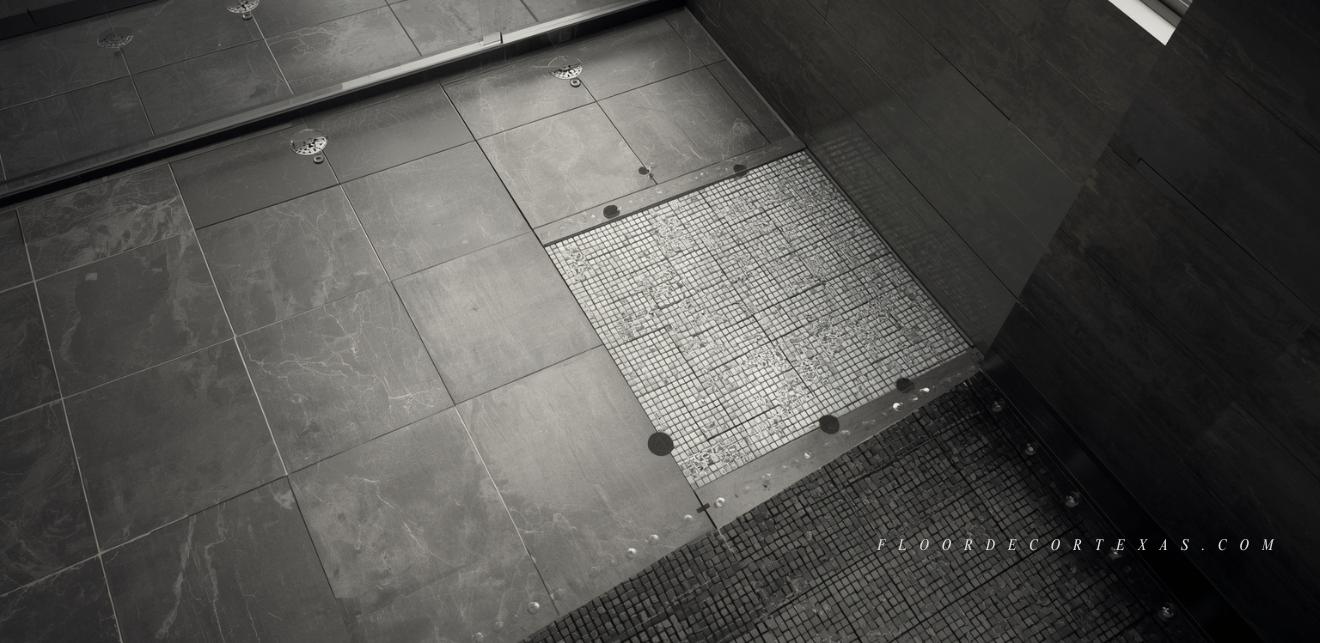
Choosing non-slip bathroom tile involves more than finding the roughest surface or the largest coefficient-of-friction number. Bathroom safety depends on the complete environment: tile classification, surface texture, water exposure, drainage, floor slope, grout joints, installation quality, cleaning habits, footwear, mobility, and the presence of soap or body-care products.
No tile can be guaranteed slip-proof in every condition. Even a product with strong laboratory results may become slippery when contaminated by soap, conditioner, oil, cleaning residue, or standing water. Manufacturers and standards organizations therefore use terms such as slip resistant rather than non-slip. The familiar phrase non-slip bathroom tile is useful for shopping, but it should not be interpreted as a guarantee against falls.
Begin by mapping how water reaches each part of the bathroom. A powder-room floor has different demands from a family bathroom, an open wet room, or a curbless shower used by someone with limited mobility. Review Floor Decor Texas tile flooring options while considering where each product will actually be installed.
Three practical bathroom zones
- Main bathroom floor: Usually level, but exposed to damp feet, splashes, bath mats, and cleaning products.
- Tub and sink splash areas: Exposed to intermittent water, soap, cosmetics, and concentrated traffic.
- Shower or wet-room floor: Sloped, frequently wet, walked on barefoot, and exposed to soap and body-care products.
A tile appropriate for the main floor is not automatically appropriate inside a shower. Ask the manufacturer to confirm the product-use classification for every location. Product documents should take priority over informal descriptions such as bathroom tile, textured tile, or commercial grade.
Non-Slip Bathroom Tile Entity Map
These organizations provide standards, accessibility rules, installation guidance, or safety information relevant to non-slip bathroom tile. Building-code and accessibility requirements can differ by jurisdiction, so local requirements should also be confirmed.
Technical resources explaining ANSI A326.3 classifications and DCOF testing.
Official guidance for accessible bathing rooms, showers, thresholds, seats, and controls.
The enforceable 2010 ADA Standards for covered facilities and bathing elements.
Industry standards covering ceramic tile installation, materials, and performance.
Consumer resources addressing fall risks and prevention for older adults.
Education and technical resources for professional tile installation.
Non-Slip Bathroom Tile DCOF Ratings Explained
DCOF means dynamic coefficient of friction. It is measured while surfaces are moving relative to one another, making it more relevant to walking than a static measurement. DCOF testing provides useful comparative information, but the result is not a prediction that a person will or will not fall.
Understanding current ANSI A326.3 classifications
Current ANSI A326.3 guidance uses product-use classifications. An Interior Wet, or IW, product has a wet DCOF of at least 0.42 under the referenced test or is manufacturer-declared for that use. Interior Wet Plus, Exterior Wet, oil-and-grease areas, mosaic surfaces, and certain structured products rely on manufacturer declarations because a single test result may not adequately characterize their intended use.
This distinction matters because older articles often present 0.42 as a universal bathroom safety threshold. It is more accurate to say that 0.42 is associated with level interior surfaces expected to be walked on when wet with water. A shower floor introduces slope, bare feet, drainage, soap, and complex surface geometry. Ask whether the manufacturer specifically declares the tile suitable for shower floors or another applicable wet-plus use.
The wet DCOF benchmark associated with the ANSI A326.3 Interior Wet classification, not a universal guarantee against slipping.
European ratings are not direct conversions
DIN 51097 classifications address barefoot wet areas and use A, B, and C categories. DIN 51130 classifications use R values for shod working areas where contaminants may be present. These test methods use different procedures and should not be converted directly into ANSI A326.3 DCOF values. If a product lists only a European classification, request written confirmation of suitability for the proposed bathroom location.
Pro Tip
Ask for the technical data sheet for the exact tile color, finish, and size. A different finish within the same collection may have a different wet-use classification.
Editorial Team
Non-Slip Bathroom Tile Recommendations by Zone

Main bathroom floor
For a level bathroom floor expected to become wet, start with tile classified for Interior Wet use. Matte and lightly structured finishes may provide more practical grip than highly polished surfaces, but visual finish alone is not proof of performance. Confirm the product classification, use absorbent mats where appropriate, and keep walking paths free of loose rugs or clutter.
Sink and bathtub splash zones
Splash zones deserve the same planning as the rest of the floor because water and personal-care products can accumulate near fixtures. Select an approved wet-area floor tile, provide adequate ventilation, repair plumbing leaks promptly, and avoid cleaning products that leave a glossy residue.
Shower and wet-room floors
Mosaics are frequently selected for shower floors because their numerous grout joints can add texture and their small format can follow a sloped substrate. However, a universal 2-inch maximum is not an ANSI slip-resistance rule. Tile size must also be compatible with the drain type, slope, sheet mounting, installation method, and manufacturer's shower-floor approval.
Large-format shower tile is not automatically prohibited. Some products and installations can be suitable, particularly with linear drains and carefully formed slopes, but they require detailed design and professional execution. Do not rely on size alone. Confirm the intended use and discuss drainage, lippage, cuts, grout joints, waterproofing, and movement accommodation with the installer.
For visual inspiration that can also increase the number of grout joints, review this guide to creating mosaic tile patterns.
Match the tile to the exact wet zone
Bring your bathroom plan, drain location, accessibility needs, and preferred tile samples to a flooring consultation.
Compare Wet-Area RequirementsNon-Slip Bathroom Tile for Children and Older Adults
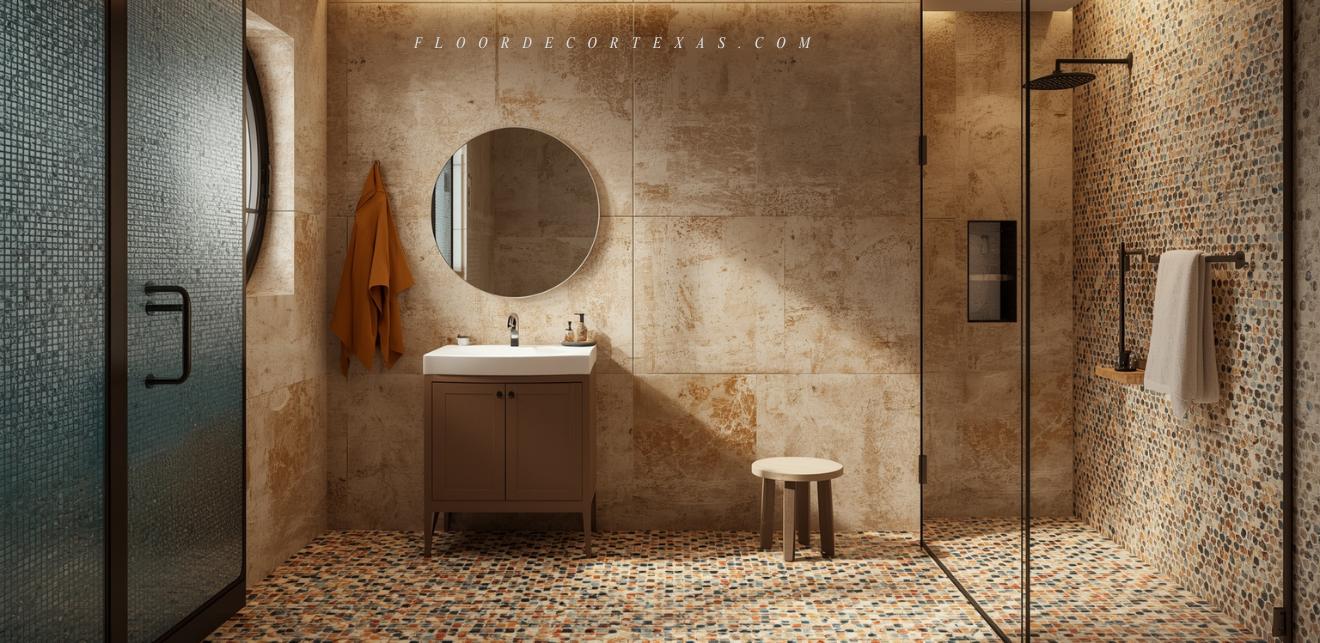
Tile selection is only one part of reducing bathroom fall risk. Children may move quickly and spread water beyond expected splash areas. Older adults may have changes in balance, vision, strength, sensation, or reaction time. A bathroom intended for multiple generations should provide predictable walking surfaces and reduce unnecessary changes in level.
Helpful features for family bathrooms
- Use floor tile with an appropriate wet-use classification.
- Provide bright, even lighting without severe glare.
- Use securely installed grab bars where appropriate, not towel bars as supports.
- Keep frequently used products within easy reach.
- Avoid loose rugs, curled edges, and clutter in walking paths.
- Clean spills and soap residue before they create a slick film.
Visible contrast can help users distinguish the floor, walls, fixtures, and changes in level. Very busy patterns or strong glare may make depth and boundaries harder to interpret for some people. View samples under the bathroom's actual lighting before making the final selection.
Non-Slip Bathroom Tile for Accessible Walk-In Showers
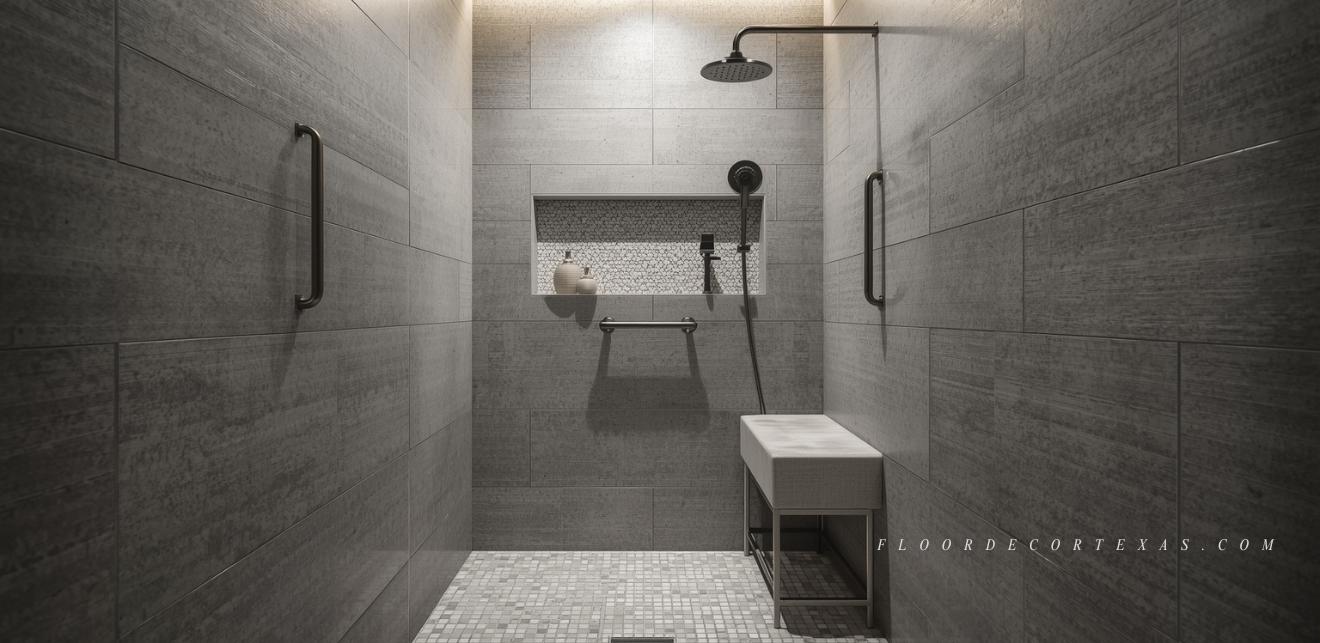
A low or flush transition can reduce a tripping barrier and improve access, but curbless design requires careful waterproofing and drainage. The U.S. Access Board explains that thresholds in roll-in shower compartments are generally limited to 1/2 inch, with applicable change-in-level requirements. It also notes that trench drains and other flush-transition designs may provide easier access.
Slope and drainage must be coordinated
The source article's instruction to aim for a 1:48 shower slope was too broad. The Access Board discusses 1:48 as a maximum accessible slope that can help control water without impairing access. Plumbing codes and tile-industry methods may require different drainage slopes in other residential shower conditions. The designer, plumber, waterproofing professional, tile installer, and local code authority should coordinate the assembly.
A linear drain may simplify some layouts, but it is not universally required and does not compensate for poor waterproofing or an incorrectly formed floor. The drain location, slope direction, waterproofing connection, tile thickness, and entry condition must work as a single system.
Accessibility involves more than the floor
Depending on the user's needs, an accessible shower may also include properly located grab bars, a suitable seat, reachable controls, a handheld spray unit, adequate maneuvering space, and an enclosure that does not obstruct entry or transfer. ADA requirements generally apply to covered public and commercial facilities, not automatically to every private residence, but the guidance can inform residential planning.
Non-Slip Bathroom Tile Material and Maintenance Comparison
Porcelain, non-porcelain ceramic, and natural stone can all be used in bathrooms when the exact product and installation system suit the location. Material category alone does not determine slip resistance.
| Material | Potential Advantage | Verify Before Installation | Care Consideration |
|---|---|---|---|
| Porcelain | Low water absorption and many formats | Wet-use classification and finish | Texture may require detailed cleaning |
| Ceramic | Broad design and price selection | Floor rating and wet-area approval | Protect damaged glaze and grout |
| Natural stone | Natural variation and distinctive texture | Finish, absorption, sealing, suitability | Use compatible pH-neutral products |
| Mosaic tile | Follows slopes and adds grout joints | Sheet alignment and shower approval | More grout requires routine care |
Cleaning affects slip resistance
Soap film, conditioner, body oils, mineral deposits, and excess cleaning product can alter the surface. Follow the tile, grout, and sealer manufacturers' instructions. Rinse away cleaning residue and address clogged drains or standing water promptly. Avoid waxes or polishing products unless expressly approved for a wet bathroom floor.
Natural stone may require a compatible sealer, but sealing does not automatically make a surface slip resistant. Some topical products can change traction. Review Floor Decor Texas guidance on natural stone flooring before selecting a finish or care product.
Non-Slip Bathroom Tile Frequently Asked Questions
Does non-slip bathroom tile prevent every fall?
No. Slip-resistant tile can help manage risk, but no floor prevents every fall. Water, soap, cleaning residue, footwear, balance, lighting, drainage, maintenance, and installation all influence real-world safety.
Is a wet DCOF of 0.42 suitable for a bathroom?
A wet DCOF of at least 0.42 is associated with the ANSI A326.3 Interior Wet classification. It is useful for level interior surfaces walked on when wet, but it does not by itself establish suitability for sloped, soapy shower floors.
Must shower floor mosaics be 2 inches by 2 inches or smaller?
No universal ANSI slip-resistance rule establishes that exact maximum. Small mosaics are common because they follow slopes and create more grout joints, but the tile, drain, slope, mounting, installation system, and manufacturer approval must be evaluated together.
Can polished tile be used in a bathroom?
Some polished products may be suitable for bathroom walls or other dry applications. Do not assume a polished tile is suitable for a wet floor. Follow the exact manufacturer's use classification and avoid using visual appearance as the only safety criterion.
Is porcelain always safer than ceramic tile?
No. Porcelain is defined partly by low water absorption, not by universal slip resistance. A suitable ceramic product can outperform an unsuitable porcelain product in a particular wet location. Compare the exact surface and use classification.
What documents should I request before buying bathroom tile?
Request the product data sheet, ANSI A326.3 use classification, installation instructions, cleaning guidance, warranty, and written confirmation that the exact tile size and finish are suitable for the proposed bathroom zone.
Plan a safer bathroom without sacrificing design
Compare tile classifications, finishes, formats, drainage requirements, and maintenance needs before selecting a floor for each bathroom zone.