

Quick Answer
Are checkered marble floors worth the investment?
Checkered marble floors can be worthwhile when a homeowner values natural variation, architectural impact, and long-term maintainability. Success depends on choosing suitable marble and finishes, testing wet slip performance, preparing the substrate, planning movement joints, hiring qualified installers, and accepting that acidic spills can etch marble even when it is sealed.
Explore Marble FlooringCheckered Marble Floors as an Architectural Feature
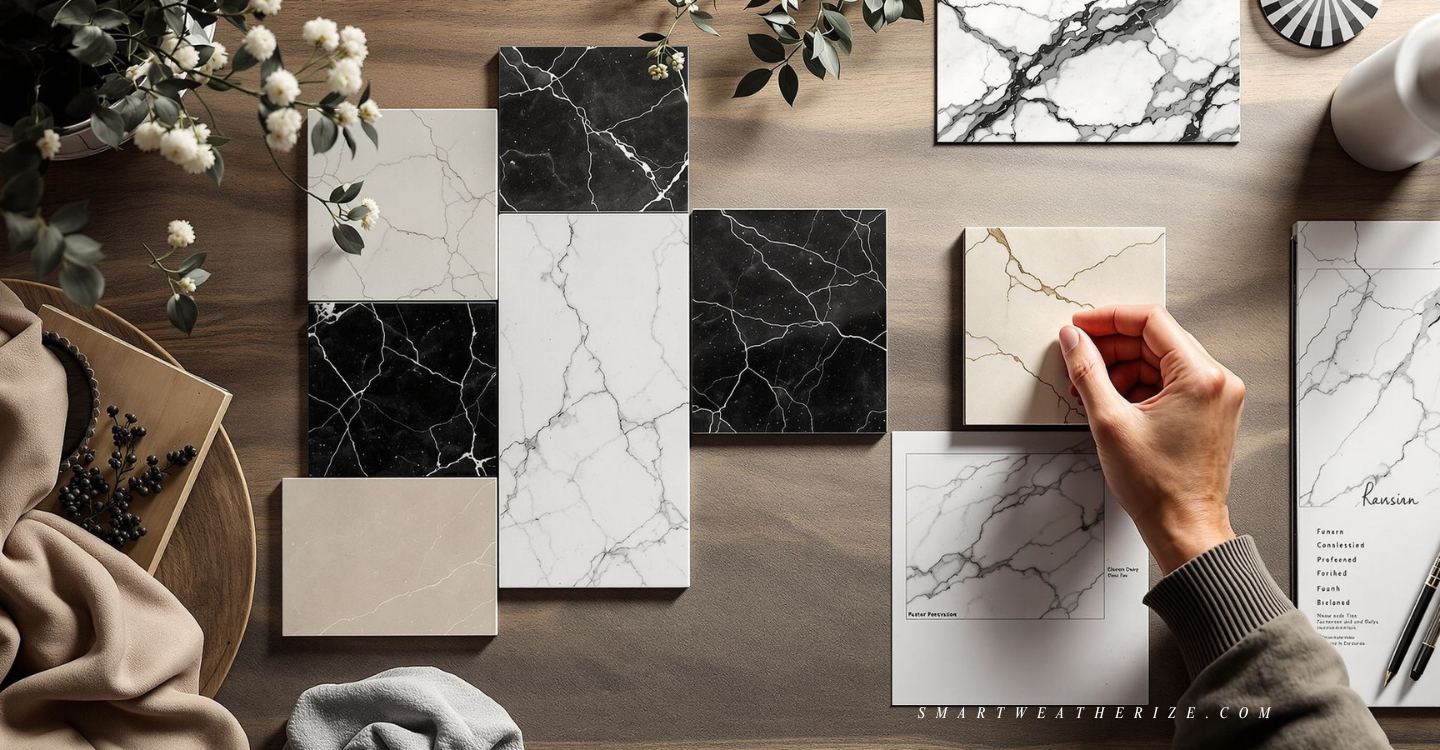
Checkered marble floors arrange two contrasting or complementary stones in an alternating grid. Black and white is the most familiar combination, but the concept also works with cream and beige, gray and white, green and cream, or stones selected for a quieter tonal difference. The visual identity comes from repetition, alignment, and contrast rather than from one required color pair.
The checkerboard motif has appeared in significant interiors across multiple design periods, but a homeowner does not need an uncertain historical story to justify it. The pattern remains useful because it can establish an immediate architectural rhythm. It can make an entry feel formal, give a kitchen a traditional reference, or create a graphic foundation beneath restrained modern furnishings.
Natural marble adds variation that printed imitations cannot duplicate exactly. Veins, background color, mineral markings, and small differences between pieces make every installation distinct. That variability is part of the material, but it also means the final floor should be planned from several representative samples rather than a single display tile.
Homeowners should compare checkered marble with other stone floor options, lower-maintenance porcelain tile floors, and resilient flooring alternatives. The best choice depends on whether material authenticity, maintenance effort, repairability, comfort, or initial project scope carries the most weight.
Checkered Marble Floors Entity Map
Natural Stone Institute
The Natural Stone Institute publishes consumer guidance for stone identification, cleaning, stain response, and sealing.
Tile Council of North America
The Tile Council of North America publishes installation resources for ceramic, glass, and natural stone tile assemblies.
American National Standards Institute
ANSI A326.3 describes laboratory and field methods for measuring dynamic coefficient of friction on hard-surface flooring.
National Tile Contractors Association
The National Tile Contractors Association provides technical education and contractor qualification resources.
Ceramic Tile Education Foundation
The Ceramic Tile Education Foundation administers installer education and certification programs.
National Floor Safety Institute
The National Floor Safety Institute develops education and standards-related resources concerning walkway safety.
Checkered Marble Floors Design and Material Selection
Choose compatible stones
A checkerboard floor places two materials in the same service environment. They should be evaluated together for thickness, calibration, surface finish, abrasion response, moisture sensitivity, cleaning compatibility, and expected variation. One stone should not require a maintenance process that damages the other.
Ask the supplier for the commercial name and geological classification of each stone. The word marble is sometimes used broadly in the marketplace, while care requirements depend on actual composition. Request representative samples from the available production lot and inspect them after they are cleaned and fully dry.
Compare polished, honed, and textured finishes
Polished marble creates strong reflection and emphasizes color and veining. It also makes etching, traffic wear, and some scratches more visible. A honed finish has lower reflectivity and may make ordinary wear less conspicuous, but the term honed does not by itself guarantee suitable wet slip performance.
When a floor may become wet, request documented slip-test information for the exact stone, finish, treatment, and intended use. Coefficient-of-friction data is one part of a safety assessment, not a promise that falls cannot occur. Contamination, footwear, slope, drainage, maintenance, lighting, and human behavior also affect risk.
Select tile size and pattern orientation
Large modules create fewer joints and a broader graphic effect. Smaller modules increase the number of joints and can follow slopes or irregular spaces more easily, depending on the installation. Neither option automatically makes a room appear larger. Contrast, viewing direction, border placement, furnishings, and the amount of visible floor all influence perception.
Lay out the pattern from critical sightlines rather than automatically starting against one wall. Consider the view from entrances, the relationship to cabinets and islands, perimeter cuts, doorway transitions, and whether a border will frame the field. The Floor Decor Texas guide to tile design in small rooms provides additional layout considerations.
2 stones
Both stones must work with the same room conditions, installation system, cleaning process, and desired finish.
Checkered Marble Floors Installation and Budget Planning
Evaluate the supporting assembly
Natural stone tile needs a properly designed, constructed, and prepared supporting assembly. Substrate flatness, structural movement, deflection, cracks, moisture, bonding coverage, and material compatibility can affect performance. Requirements differ for concrete, wood-framed floors, wet areas, exterior locations, and specialty assemblies.
Do not assume a crack-isolation membrane eliminates every movement concern. Existing concrete joints and active cracks require project-specific treatment. Tile installations also need movement accommodation because the structure and finish layers expand and contract differently.
Plan movement joints and direct-sun exposure
Movement joints belong in tile and stone installations even when they interrupt a checkerboard pattern. Their location and frequency depend on room size, substrate joints, moisture, temperature range, structural conditions, direct sunlight, and other project factors. Large sunlit areas may require more frequent accommodation than small, stable interior rooms.
Direct sunlight can heat portions of a floor unevenly and increase movement demands. That is different from claiming that all pale marble will turn yellow from ultraviolet light. Some discoloration problems relate to the specific stone, moisture, setting materials, coatings, contaminants, or oxidation. Diagnose a color change before selecting a remedy.
Compare complete project scopes
There is no reliable universal installed price for checkered marble. The stone, grade, tile size, freight, pattern, room geometry, demolition, substrate preparation, movement details, setting materials, grout, labor, access, trim, and local market all affect cost. A two-color layout may also require additional sorting and alignment.
Request written estimates that separate materials, preparation, installation, transitions, protection, cleanup, and possible change conditions. Ask contractors for relevant natural-stone experience, references, insurance, and qualifications. Review how they will handle layout approval, shade variation, bonding coverage, movement joints, and damaged pieces.
Pro Tip from the Editorial Team: Approve a dry layout using pieces from both stone lots before installation begins. Photograph the approved arrangement and mark distinctive pieces that should be moved, grouped, or excluded.
Compare Marble with Porcelain Alternatives
Porcelain can reproduce a checkerboard appearance with different care, variation, installation, and repair characteristics.
Compare Tile Floor OptionsCheckered Marble Floors Safety and Maintenance

Control grit and spills
Sand and soil can abrade marble as people walk across it. Use compatible walk-off mats at entrances and remove dry grit with a clean, untreated dust mop or a properly configured hard-floor vacuum. Check wheels and attachments for worn parts that could scratch the stone.
Blot spills instead of wiping them across a larger area. Marble is calcium based and can be etched by acidic substances such as vinegar, citrus, wine, and some bathroom cleaners. A sealer does not prevent this chemical reaction. Clean with a neutral stone cleaner, stone soap, or another product approved for the exact material.
Treat sealing as a product-specific decision
Marble does not automatically require sealing every year. Some stone and finish combinations may benefit from an impregnating treatment, while others may not need one. The supplier and sealer manufacturer should determine compatibility and timing based on the installed stone and exposure.
An impregnating treatment improves stain resistance. It does not make marble stain proof, etch proof, scratch proof, or slip proof. Avoid film-forming products or topical treatments unless a qualified professional confirms they are suitable for the floor, maintenance program, appearance, and safety requirements.
Monitor traffic wear and wet conditions
High-traffic paths may gradually develop a different sheen from protected areas. This is especially visible on polished dark and light stones placed beside each other. Rugs can reduce abrasion, but their backing must be compatible and slip resistant. Clean beneath them so trapped grit does not become an abrasive layer.
Bathrooms require more than choosing a finish described as honed. Evaluate wet slip-test data, tile size, joint pattern, drainage, slope, bath mats, lighting, transitions, and who will use the room. A field-applied treatment should be tested for appearance, maintenance, durability, and measured performance before broad application.
Keep repair material and records
Order an appropriate amount of attic stock for future repair. Matching natural stone later can be difficult because color and veining vary between lots. Store leftover pieces flat, dry, protected, and labeled with the stone names, supplier, finish, installer, and project date.
Keep photographs, invoices, product data, setting-material details, grout information, sealer records, and care instructions. These documents help a restoration specialist distinguish the stones and avoid incompatible treatments. Additional routine guidance is available in the Floor Decor Texas article about how to clean marble floors.
Checkered Marble Floors Comparison Table
| Decision Area | Natural Checkered Marble | Stone-Look Porcelain |
|---|---|---|
| Visual character | Natural veining and variation unique to each piece | Printed visual with controlled variation and possible repetition |
| Acid exposure | Marble can etch when exposed to common acids | Glazed porcelain generally avoids marble-style acid etching |
| Finish options | Polished, honed, or specialty stone finishes | Manufacturer-defined surfaces and use classifications |
| Installation | Stone-specific assembly and material evaluation required | Ceramic-tile methods and product-specific requirements apply |
| Matching repairs | Later stone lots may differ in color and veining | Later production runs may differ or become unavailable |
| Routine care | Neutral stone care with prompt acid-spill response | Manufacturer-approved tile and grout maintenance |
Checkered Marble Floors Frequently Asked Questions
Are checkered marble floors outdated?
No design is permanently current or outdated. Checkerboard floors can support traditional or contemporary rooms depending on color, scale, finish, border treatment, furnishings, and surrounding architecture.
Can checkered marble floors be used in bathrooms?
They can be considered for appropriate bathroom locations, but material suitability, wet slip performance, drainage, slope, tile size, waterproofing, maintenance, and user needs must be evaluated together.
Do checkered marble floors require annual sealing?
Not automatically. Sealing depends on the exact stones, finishes, exposure, and product guidance. When appropriate, an impregnating treatment improves stain resistance but does not prevent acid etching.
Do checkered marble floors increase home value?
There is no reliable universal percentage. Buyer preferences, installation quality, condition, design compatibility, location, and the overall home influence resale outcomes. Choose marble primarily because it suits the property and ownership plan.
Are honed checkered marble floors slip resistant?
The word honed alone does not establish wet slip performance. Request test data for the exact stone and finish, then consider contamination, drainage, slope, joints, footwear, maintenance, and intended users.
Plan Checkered Marble Floors with Confidence
Build the project around verified materials, measured performance, qualified installation, and realistic maintenance.
- Confirm both stones and finishes suit the room
- Evaluate wet slip performance when relevant
- Plan substrate preparation and movement joints
- Keep attic stock and complete project records