Quick Answer
What are the best budget-friendly floor tile ideas for Texas homes?
Budget-friendly floor tile ideas include standard-size ceramic, entry-level porcelain, wood-look tile, simple straight-lay patterns, and selective use of decorative accents. The lowest tile price does not always create the lowest project cost. Subfloor preparation, layout complexity, waste, trim, setting materials, and labor must also be compared.
Budget-Friendly Floor Tile Ideas Begin With the Total Project Cost
Texas homes vary widely in age, foundation design, soil conditions, floor plan, and existing flooring. A tile that works well in one house may require substantially more preparation in another. Before comparing material prices, identify the rooms being tiled, substrate condition, moisture exposure, traffic, accessibility needs, transitions, and installation pattern.
The tile itself is only one part of the budget. A complete estimate may include removal, disposal, delivery, moisture evaluation, crack treatment, floor flattening, underlayment or membrane, mortar, grout, sealant, trim, movement joints, transitions, baseboards, furniture handling, and labor. Complicated patterns and numerous small spaces can also increase cutting time and waste.
Tile can feel cooler than carpet or wood because it readily conducts heat away from bare feet. That sensation can be welcome during warm Texas weather, but tile does not actively cool a house. Floor temperature depends on the slab or subfloor, indoor conditions, sunlight, insulation, and surrounding materials.
Browse Floor Decor Texas tile flooring options after establishing a realistic project scope. The best value is normally a tile that suits the room, can be installed correctly, and will not require premature replacement.
Five factors that shape a tile budget
Material
Ceramic, porcelain, trim pieces, grout, mortar, membrane, and sealants all affect cost.
Preparation
Cracks, moisture, residue, uneven areas, and movement must be evaluated before installation.
Tile Format
Large or plank-shaped tile can require a flatter substrate and more installation planning.
Layout
Straight layouts are generally simpler than diagonal, herringbone, bordered, or highly detailed patterns.
Project Scope
Room shape, stairs, closets, transitions, occupied-space logistics, and demolition can change the final price.
Budget-Friendly Floor Tile Ideas Entity Map
These organizations provide standards, technical guidance, or consumer information relevant to selecting and installing budget-friendly floor tile ideas.
Technical information about ceramic tile, porcelain classifications, substrates, and installation methods.
National Tile Contractors Association
Technical education and professional resources for tile installation.
ANSI Accredited Standards Committee A108
Industry standards addressing tile installation, materials, and workmanship.
Publishes test methods referenced in tile and construction standards.
Educational information about the wide variety of soil conditions found across Texas.
Official accessibility guidance concerning floor surfaces, transitions, and changes in level.
Ceramic Budget-Friendly Floor Tile Ideas
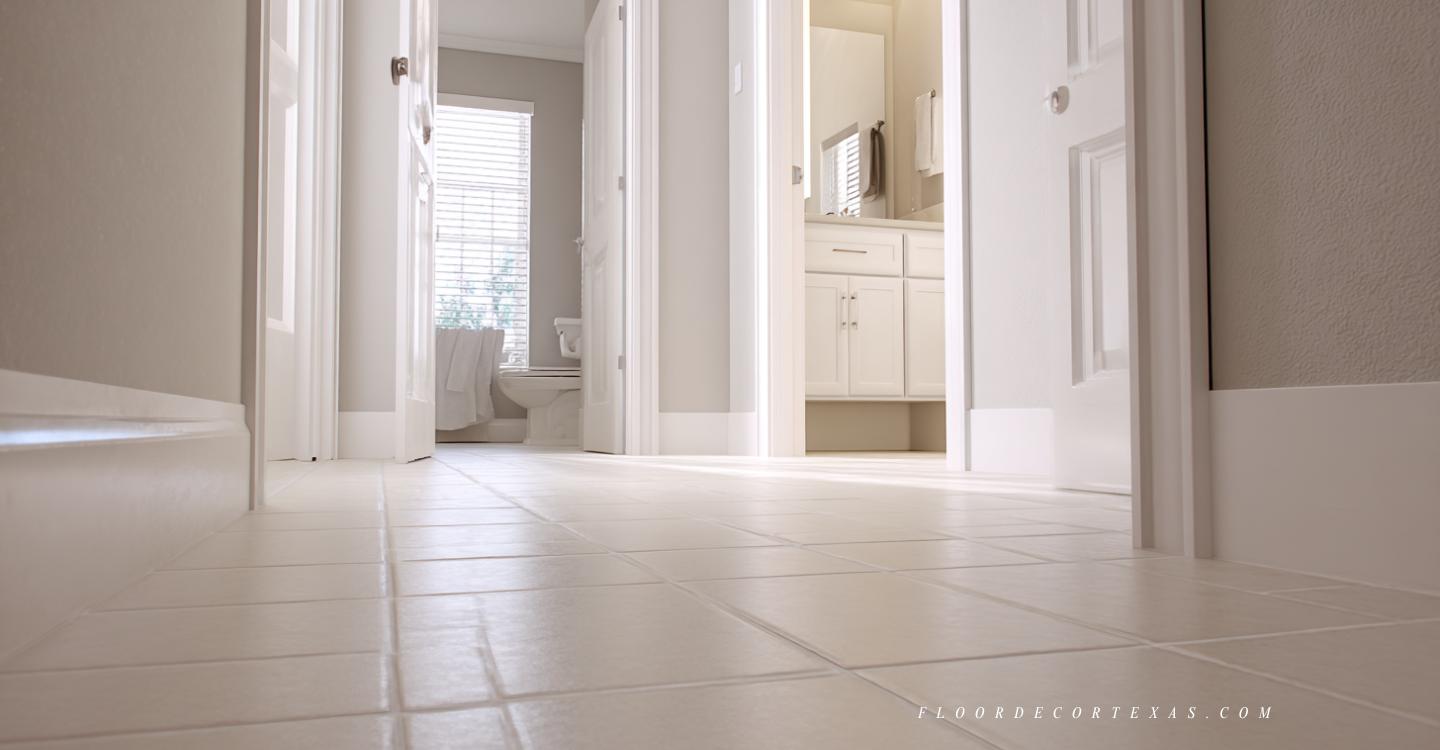
Ceramic tile is a broad category that includes porcelain and non-porcelain products. In everyday retail language, ceramic often refers to non-porcelain tile. These products can provide good value in bathrooms, laundry areas, pantries, kitchens, hallways, and other interior rooms when rated for floor use.
Why standard sizes may reduce costs
Widely stocked sizes and neutral finishes may cost less than special-order colors, uncommon formats, or coordinated decorative pieces. A simple straight layout can reduce cutting and planning compared with diagonal, herringbone, or bordered installations. Actual labor savings depend on the room and substrate.
Do not assume that a low material price means a tile is appropriate for every floor. Verify the manufacturer’s area-of-use designation, surface-wear information, wet-use classification, shade variation, caliber, installation instructions, and maintenance requirements.
Pro Tip
Before ordering, calculate the tile, waste allowance, trim, grout, mortar, membrane, and preparation together. A cheap tile that requires unusual trim or creates excessive waste may not be the least expensive option.
Editorial Team
Porcelain Budget-Friendly Floor Tile Ideas
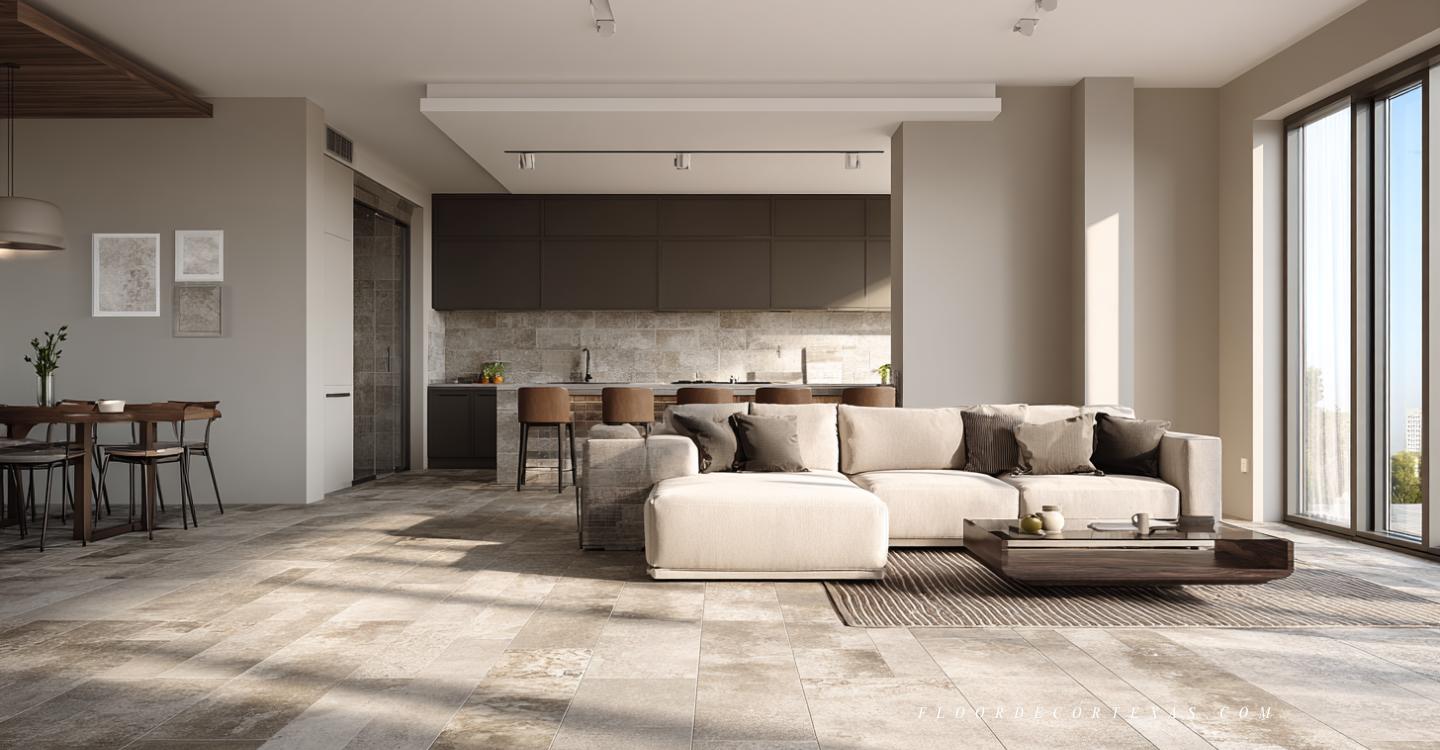
Under U.S. tile standards, porcelain is ceramic tile with water absorption of 0.5 percent or less when tested using ASTM C373. This low absorption can make an appropriate porcelain product useful in kitchens, bathrooms, entries, mudrooms, and other frequently used areas.
Porcelain is not automatically more wear resistant, more slip resistant, or better for every room. Glaze, surface construction, intended use, and test results matter. Some non-porcelain ceramic tiles have highly durable glazes, while some tile sold using the porcelain name may not meet the formal definition. Check the manufacturer’s documentation.
Budget for installation differences
Porcelain can be harder to cut and bond than non-porcelain ceramic tile. Proper tools, mortar, trowel selection, coverage, movement accommodation, and installer experience affect the result. An inexpensive porcelain product does not eliminate those requirements.
A 12-inch by 24-inch format is widely available, but fewer grout joints do not automatically mean easier cleaning or lower installation cost. Larger tile makes substrate flatness especially important. Additional floor preparation can offset savings from an inexpensive material.
The maximum water-absorption rate used in the U.S. definition of porcelain tile.
Wood-Look and Patterned Budget-Friendly Floor Tile Ideas
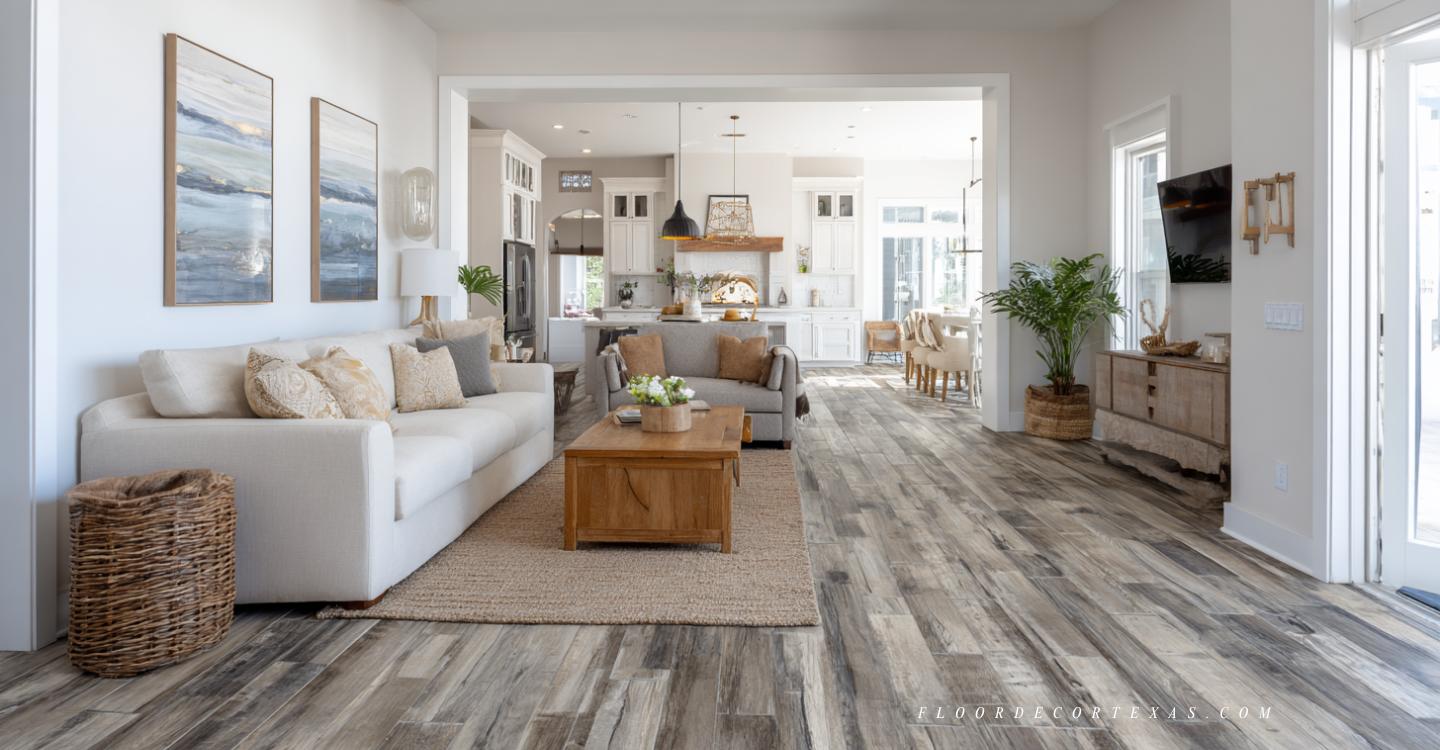
Wood-look tile
Wood-look ceramic and porcelain tile can provide grain and plank visuals while retaining the characteristics of tile. It does not swell like wood when exposed to water, but the complete installation can still be affected by substrate moisture, cracking, movement, poor coverage, or unsuitable setting materials.
Long plank tile may have intentional or allowable curvature. The layout, grout-joint width, substrate flatness, and offset should follow the tile manufacturer’s instructions and applicable industry standards. A dramatic offset can increase visible lippage when plank curvature is present.
Checkerboard and tile-rug patterns
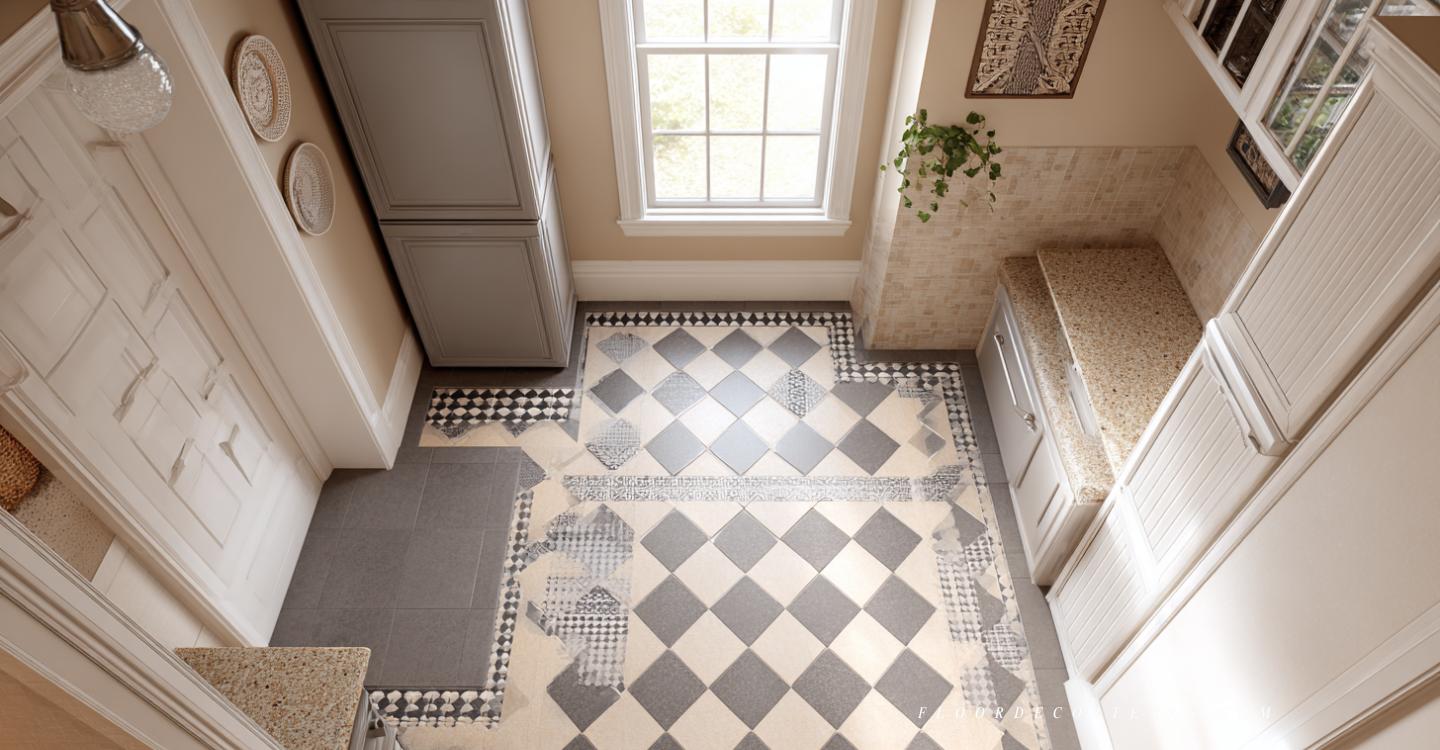
A checkerboard layout can combine two standard colors to create visual impact. A tile-rug effect uses a contrasting border around a field of simpler tile. These approaches may reduce the amount of premium decorative material, but extra layout, cuts, alignment, trim, and labor must be included in the budget.
Dry-lay a representative section before installation. Confirm that nominally matching products have compatible thickness, dimensions, edge treatment, and installation requirements. Combining unrelated collections may create height or joint-alignment problems.
Compare affordable tile without overlooking preparation
Review material, layout, substrate conditions, setting products, waste, and labor as one complete project.
Large-Format Budget-Friendly Floor Tile Ideas
Large-format neutral tile can create long visual lines and fewer grout joints. Light or mid-tone colors may help a room feel open, but the effect depends on lighting, furniture, wall color, room proportions, and layout. Warm beige, taupe, and muted gray are adaptable choices, but no color universally hides Texas dust.
Large tile requires a flatter surface
The Tile Council of North America emphasizes substrate flatness for a flat installation with limited lippage. Variations that might be easier to accommodate with smaller tile become more apparent as tile size increases. Flattening a slab or subfloor may add material and labor costs.
Large tile also requires suitable mortar, adequate coverage, correct troweling, movement joints, and careful handling. It may reduce the number of pieces installed, but that does not guarantee lower labor. Compare written estimates for the exact format rather than assuming that larger is automatically cheaper.
For additional design planning, review these timeless tile patterns.
Budget-Friendly Floor Tile Ideas Cost and Planning Comparison
The source article listed fixed Texas material prices, installed rates, and whole-home totals. Those amounts cannot be treated as current statewide facts. Product prices and labor vary by city, contractor, demolition, substrate condition, tile format, pattern, availability, and project size. Obtain itemized local quotes for the actual rooms.
| Tile Strategy | Potential Saving | Cost to Verify | Best Question to Ask |
|---|---|---|---|
| Standard ceramic | Widely stocked material and trim | Use rating and preparation | Is this exact tile approved for the room? |
| Entry-level porcelain | Low absorption at a competitive price | Cutting, mortar, and labor | What documentation confirms it is porcelain? |
| Straight layout | Simpler planning and fewer complex cuts | Room shape and centering | How will narrow perimeter cuts be avoided? |
| Large-format neutral | Fewer pieces and grout joints | Flattening, handling, and coverage | Does the substrate meet flatness requirements? |
| Decorative accent | Uses premium material selectively | Layout, trim, and additional labor | What is the installed cost of the complete pattern? |
Measure the actual floor area
Do not estimate tile coverage from the home’s total square footage or bedroom count. Measure each room and subtract areas that will not receive tile. Then add a waste allowance appropriate to the tile size, layout, room shape, breakage risk, attic stock, and installer recommendations.
A 2,400-square-foot house does not necessarily contain 1,200 or 1,600 square feet of tile-ready space. Cabinets, walls, closets, stairs, room dimensions, existing floor plans, and homeowner preferences vary too much for those figures to serve as dependable averages.
Where saving can become expensive
Do not skip necessary preparation, movement accommodation, waterproofing, suitable mortar, or appropriate grout to reduce the initial estimate. Tile is rigid and relies on a properly designed and prepared support system. Existing structural movement or foundation concerns should be evaluated by an appropriately qualified professional.
Texas contains many different soil types, including clay, sand, and shallow rocky soils. It is inaccurate to assume that every Texas house sits on expansive clay or experiences the same foundation behavior. The condition of the specific building and substrate matters more than a statewide generalization.
Budget-Friendly Floor Tile Ideas Frequently Asked Questions
What qualifies as budget-friendly floor tile?
A budget-friendly tile is one whose complete installed cost fits the project while meeting the room’s performance requirements. Material price alone is insufficient because preparation, labor, setting materials, trim, waste, and maintenance also affect value.
Is porcelain always better than ceramic tile?
Porcelain has water absorption of 0.5 percent or less, but it is not automatically best for every room. A properly rated non-porcelain ceramic tile can perform well. Compare intended use, finish, wear properties, installation, and price.
How much does tile installation cost in Texas?
There is no dependable single statewide rate. Labor, demolition, preparation, tile format, pattern, room size, city, and contractor scope affect pricing. Request itemized local estimates based on an inspection of the actual floor.
Is wood-look tile cheaper than hardwood?
It may be, but not universally. Compare the complete installed prices, including tile preparation and labor versus wood moisture control, underlayment, installation, and finishing. Product quality and room conditions can change the result.
Does large-format tile reduce installation costs?
Not necessarily. It uses fewer pieces and grout joints, but may require a flatter substrate, specialized handling, greater mortar coverage, and more careful lippage control. Obtain a quote for the exact size and room.
What should an itemized tile estimate include?
It should identify tile, quantity, waste, trim, demolition, disposal, preparation, moisture or crack work, membrane, mortar, grout, sealant, movement joints, transitions, baseboards, furniture handling, labor, schedule, and warranty responsibilities.
Turn your tile ideas into a practical project plan
Compare affordable materials alongside preparation, installation, maintenance, and the needs of each room in your Texas home.
