
Quick Answer
What is the best high-traffic flooring for Texas homes?
The best high-traffic flooring for Texas homes depends on the room, moisture exposure, comfort preferences, and maintenance expectations. Luxury vinyl, porcelain or ceramic tile, engineered hardwood, laminate, and carpet tile can all perform well when their product ratings, installation requirements, and warranties match the intended space.
Explore Flooring OptionsLuxury Vinyl Tile: High-Traffic Flooring for Texas Homes
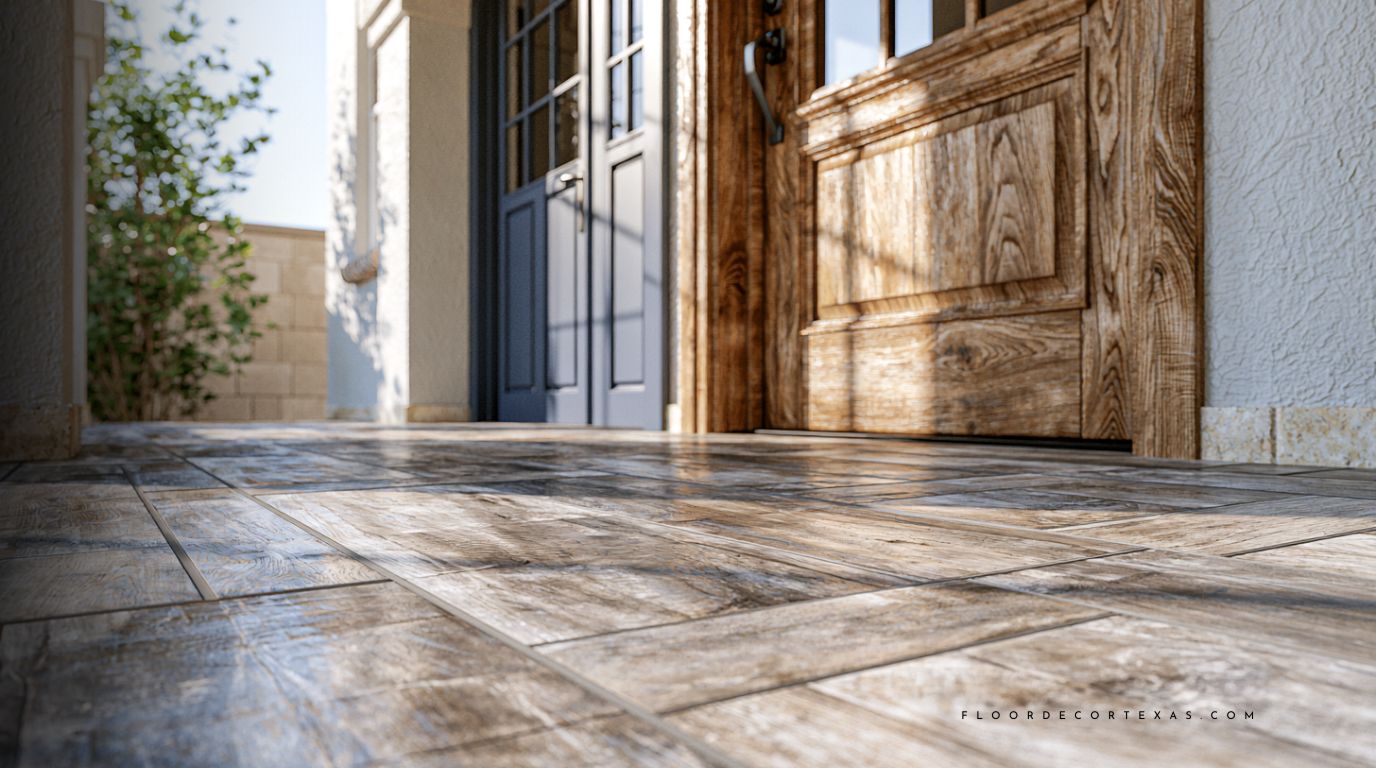
Texas floors must contend with tracked-in grit, active households, pets, spills, strong sunlight, and frequent transitions between outdoor heat and air-conditioned interiors. That makes product selection more important than choosing a material based on appearance alone. The best high-traffic flooring for Texas homes is flooring whose construction, use rating, installation method, and warranty fit the room.
Luxury vinyl flooring is a practical candidate for busy kitchens, living spaces, hallways, and entry areas. Its layered construction can provide good resistance to everyday scuffs and stains while reproducing the appearance of wood or stone. Rigid-core products may also feel more stable over minor subfloor variations, although no flooring should be used to conceal structural movement or an improperly prepared base.
What to verify before selecting luxury vinyl
Do not assume every vinyl floor is identical or universally waterproof. Some products are marketed as waterproof, while others are described as water resistant. Even when the planks themselves resist water, moisture can still travel through joints, reach the perimeter, affect the subfloor, or create conditions outside the warranty. Review the complete installation instructions, approved room uses, wear-layer specifications, cleaning directions, and limits on direct sunlight.
A thicker wear layer can be useful in an active household, but thickness is only one part of performance. Locking-system quality, finish chemistry, core construction, subfloor preparation, and installation workmanship also matter. Use walk-off mats at entrances, sweep away abrasive dirt, and place protective pads beneath movable furniture.
High-Traffic Flooring for Texas Homes Entity Map
These organizations publish standards, technical information, maintenance guidance, or testing resources that help consumers evaluate high-traffic flooring for Texas homes. Product-specific instructions should still control the final selection and installation.
Industry information covering resilient materials such as luxury vinyl flooring.
Technical resources for ceramic and porcelain tile selection and installation.
Consumer guidance on wood flooring, indoor conditions, maintenance, and installation.
Performance standards and educational resources for laminate products.
Guidance covering carpet construction, cleaning, maintenance, and indoor use.
Publishes test methods referenced by flooring manufacturers and industry organizations.
Ceramic Tile: High-Traffic Flooring for Texas Homes
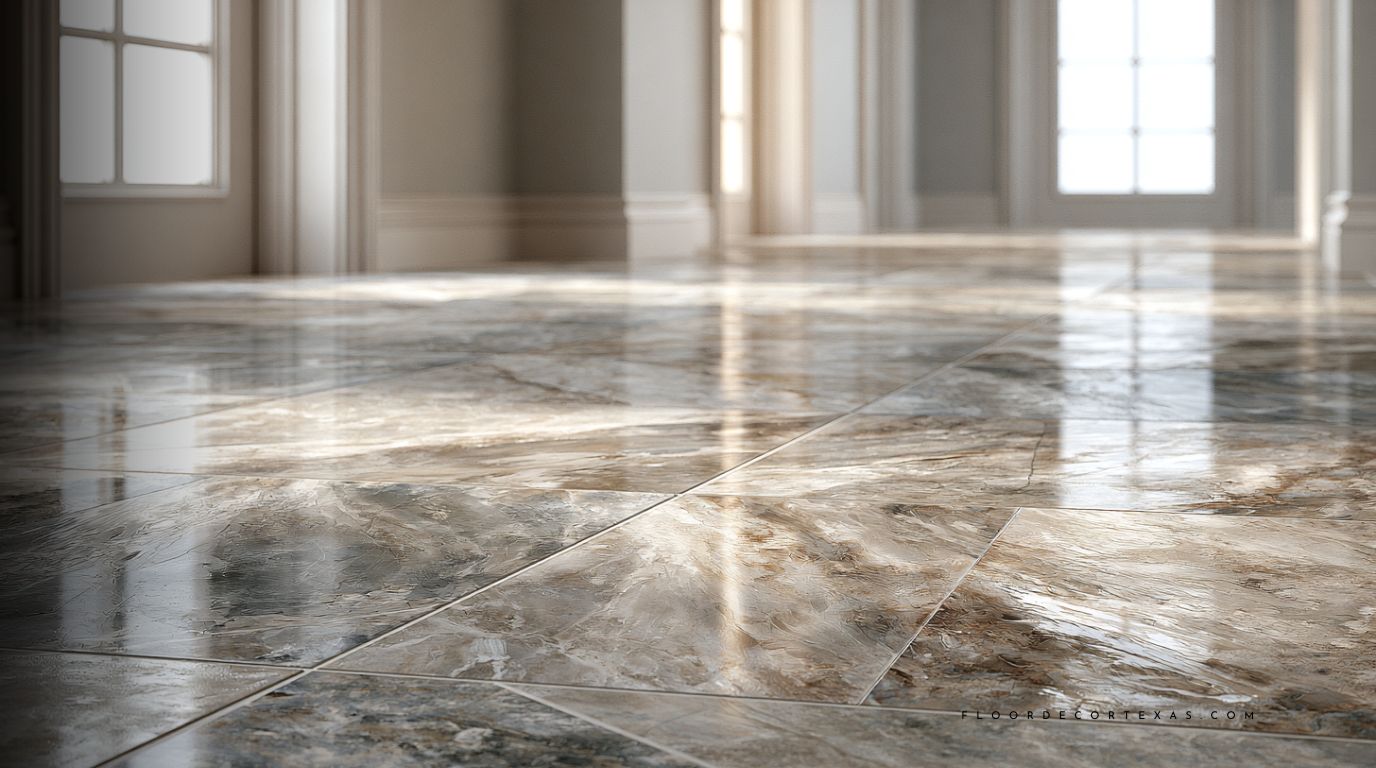
Ceramic tile flooring is widely used in Texas kitchens, bathrooms, laundry rooms, entryways, and living areas because it is easy to clean and does not hold tracked-in dirt. It can also feel pleasantly cool during warm weather. Still, describing tile as indestructible oversimplifies its performance. Tile can crack or chip when the substrate moves, the installation contains voids, an unsuitable product is used, or a heavy object strikes the surface.
Porcelain and non-porcelain ceramic tile
Porcelain tile is defined by a water-absorption rate of 0.5 percent or less when tested under the applicable standard. That low absorption can make an appropriate porcelain product useful in demanding locations. However, porcelain is not automatically the best choice for every project, and the word porcelain does not establish slip resistance, surface wear, exterior suitability, or installation quality.
For a busy household, verify the manufacturer's intended use, surface rating, cleaning requirements, and wet-area suitability. Grout selection also affects maintenance. A properly installed tile assembly requires a suitable substrate, appropriate movement accommodation, correct mortar coverage, and adequate curing. Existing cracks or movement should be evaluated before installation rather than hidden beneath new tile.
Tile is hard underfoot, which may be less comfortable in rooms where people stand for long periods. Rugs can add comfort, but use slip-resistant backings that are approved for the tile surface. For ongoing care, follow this guide to caring for tile and stone floors.
Engineered Hardwood: High-Traffic Flooring for Texas Homes
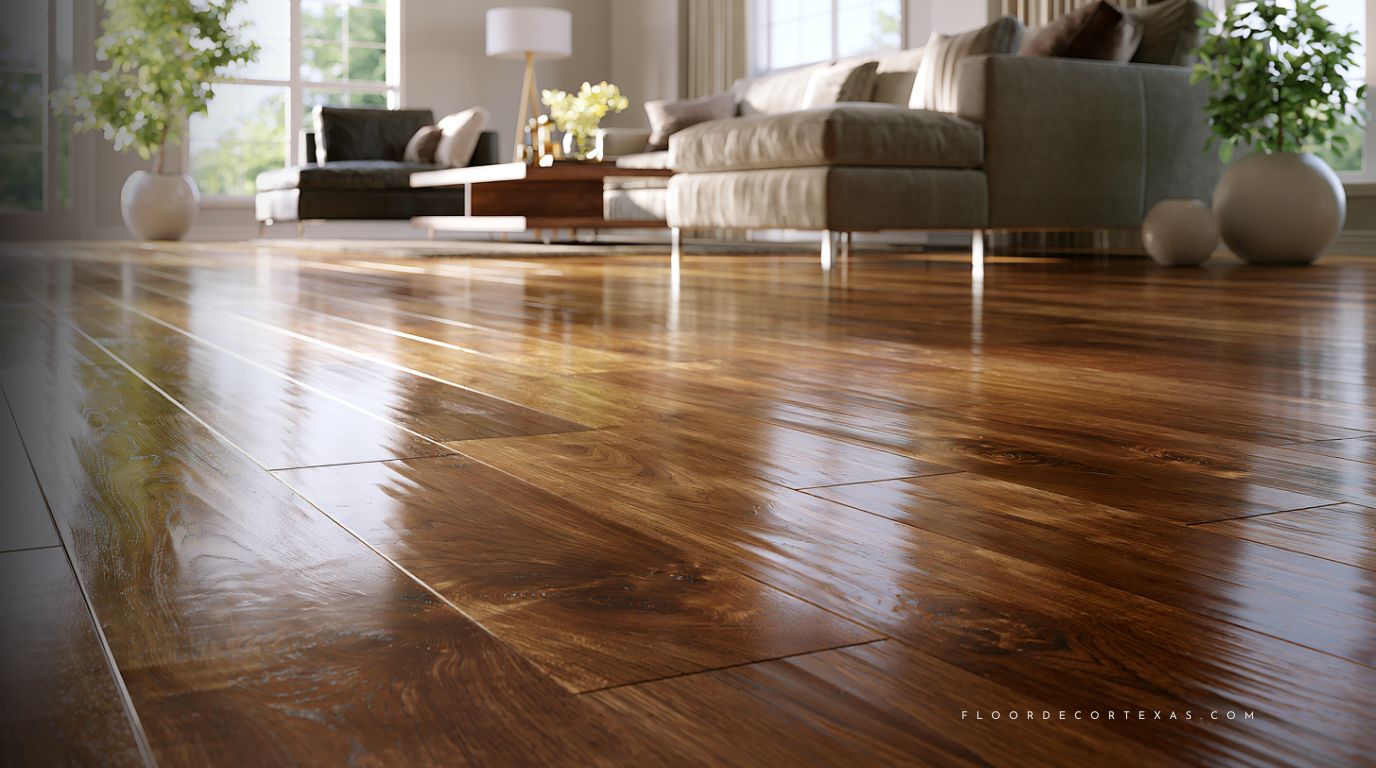
Engineered hardwood flooring offers the color and grain variation of real wood while using a layered construction that may improve dimensional stability compared with some solid wood products. It can be a strong design choice for living rooms, dining rooms, bedrooms, and other conditioned interior spaces where homeowners accept the care requirements of wood.
Wood still responds to its environment
Engineered construction does not make every wood floor waterproof or immune to seasonal movement. Wood absorbs and releases moisture as surrounding conditions change. The National Wood Flooring Association recommends maintaining occupied interiors at 60 to 80 degrees F and 30 to 50 percent relative humidity, unless the flooring manufacturer provides different limits. Consistent indoor conditions are more important than the state name on the address.
For high-traffic areas, compare finish warranties, surface texture, species hardness, wear-layer construction, board dimensions, and the manufacturer's approved installation methods. Some engineered floors can be refinished, while others cannot be sanded or can only be renewed in limited ways. Ask for written product information instead of assuming all engineered hardwood has the same service life.
Core factors to compare: room use, moisture exposure, surface durability, installation requirements, and maintenance expectations.
Promptly wipe spills, keep pet nails trimmed, use mats at exterior doors, and avoid steam cleaners unless the manufacturer expressly approves them. Strong sunlight can also change the color of natural wood over time. Window coverings and periodic furniture rearrangement can help the floor age more evenly.
Laminate Flooring: High-Traffic Flooring for Texas Homes
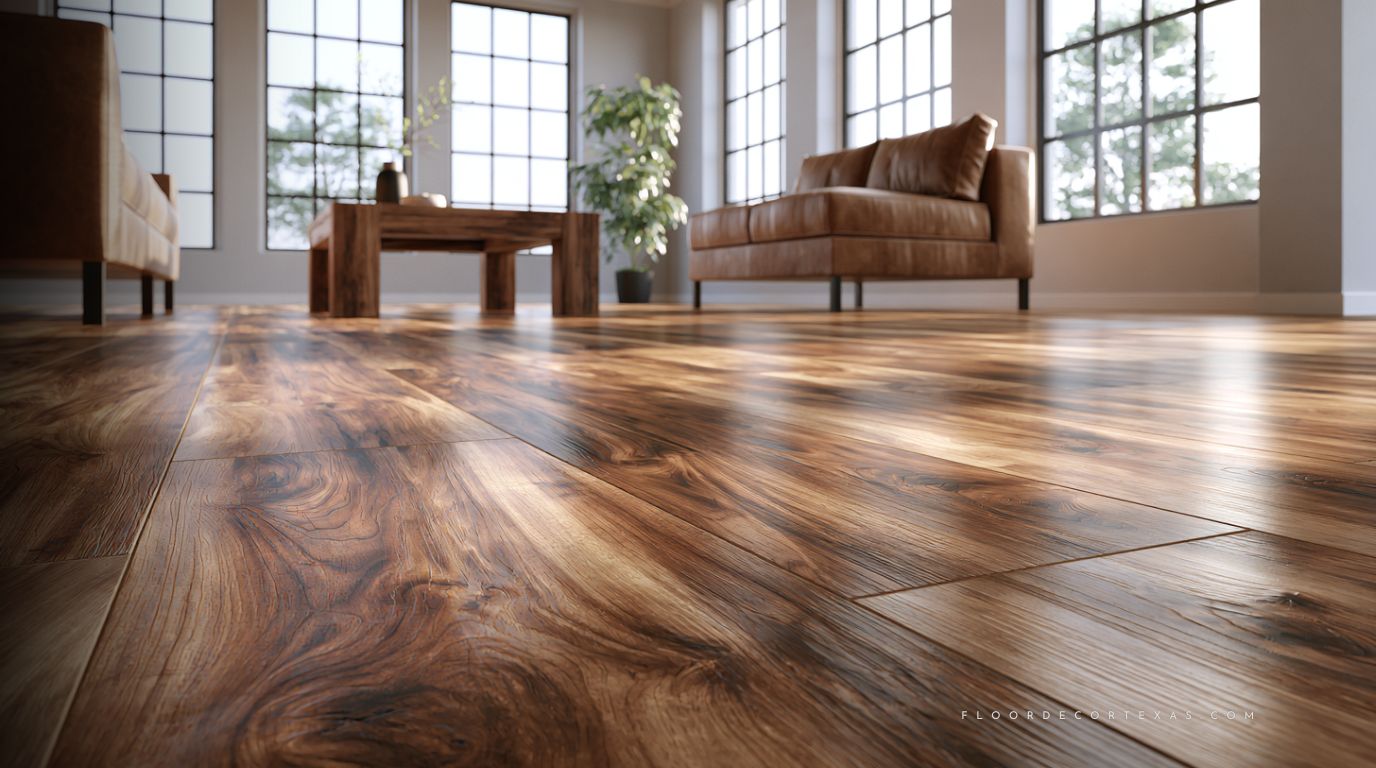
Laminate flooring can deliver a convincing wood appearance at a price that may leave more room in the renovation budget for subfloor work, trim, or professional installation. Its durable surface can suit family rooms, halls, offices, and bedrooms when the chosen product is rated for the intended traffic.
Do not select laminate by AC rating alone
Abrasion class information can help compare surface-wear performance, but a higher number is not a substitute for checking the complete product specification. Residential suitability, joint strength, impact resistance, stain resistance, moisture limitations, underlayment, subfloor flatness, and warranty exclusions can all affect the result. An AC4 or AC5 label alone does not prove that a floor is appropriate for every Texas home.
Water performance varies substantially. Some laminate collections allow wet mopping or provide limited spill protection, while others require rapid cleanup and prohibit installation in specific wet areas. Water-resistant and waterproof are not interchangeable terms. Follow the exact cleaning and installation directions for the selected collection, including perimeter expansion requirements.
Pro Tip
Bring flooring samples into the room and examine them during morning, afternoon, and evening light. Then request the product data sheet and warranty for the exact color and construction. A showroom label is not a replacement for written specifications.
Editorial Team
Compare the room before comparing samples
Tell a flooring professional about foot traffic, pets, moisture, sunlight, subfloor conditions, and cleaning habits before narrowing the material list.
Compare Project RequirementsCarpet Tiles: High-Traffic Flooring for Texas Homes

Carpet tile is a useful alternative when a household wants a softer surface in a playroom, media room, office, bedroom, or finished multipurpose area. The modular format can make it possible to replace a damaged section instead of removing an entire room of broadloom carpet. That benefit depends on retaining matching attic stock and following the original installation pattern.
Performance depends on construction and maintenance
Select carpet tile according to the manufacturer's residential or commercial use guidance. Dense construction, suitable fiber, backing design, installation method, and soil-hiding color can influence how well it handles traffic. Modular carpet may also help absorb sound, but acoustic performance varies by product and should be verified through published test information when sound control is a major goal.
Carpet tile is not automatically appropriate for bathrooms, flood-prone rooms, or substrates with unresolved moisture. Confirm moisture-testing requirements and approved adhesives before installation. Vacuum high-traffic lanes frequently, respond to spills promptly, and follow the manufacturer's extraction-cleaning schedule. Rotating or replacing a tile may help with isolated wear, but a replacement stored for years can look different from surrounding tiles that have experienced sunlight and cleaning.
Households with allergy concerns should focus on a complete cleaning plan rather than relying on broad claims about any single material. Routine soil removal, properly maintained equipment, prompt moisture control, and appropriate product selection matter across hard and soft surfaces.
High-Traffic Flooring for Texas Homes Comparison
No material wins every category. Use this comparison to identify likely candidates, then confirm the specifications and installation requirements of the exact product under consideration.
| Flooring | Potential Best Fit | Verify Before Buying | Main Caution |
|---|---|---|---|
| Luxury vinyl | Kitchens, halls, living areas | Water claim, wear layer, sunlight limits | Performance varies by construction |
| Ceramic or porcelain | Entries, kitchens, bathrooms | Use rating, slip properties, substrate | Hard underfoot and can crack |
| Engineered hardwood | Conditioned living and dining rooms | Humidity range, finish, wear layer | Wood responds to moisture |
| Laminate | Family rooms, halls, offices | Use class, water limits, warranty | Joints require proper spill care |
| Carpet tile | Offices, playrooms, media rooms | Traffic rating, backing, attic stock | Needs frequent soil removal |
How to make the final decision
Start with the room rather than a favorite photograph. Record whether the area has exterior doors, direct afternoon sun, pets, rolling furniture, standing water risks, long periods of standing, or sound-control needs. Next, assess the substrate and identify any moisture or flatness issues. Finally, compare written product documents and request an installation proposal that identifies preparation work.
The lowest material price does not always produce the lowest completed-project cost. Removal, disposal, moisture mitigation, floor leveling, underlayment, trim, transitions, furniture moving, and stair work can change the total. A detailed estimate makes products easier to compare and reduces last-minute surprises.
High-Traffic Flooring for Texas Homes Frequently Asked Questions
Which flooring is best for Texas homes with dogs?
Luxury vinyl, suitable tile, and durable laminate are common candidates because their surfaces can be easier to clean than many soft floors. Compare scratch, stain, and moisture guidance for the exact product. Keep pet nails trimmed, clean grit promptly, and use pads beneath movable furniture.
Is porcelain tile better than ceramic tile for high traffic?
Porcelain's low water absorption can be valuable, but the best tile depends on its intended use, surface properties, installation system, and room conditions. A correctly selected non-porcelain ceramic tile may perform well in many residential settings. Verify the manufacturer's rating instead of relying only on the category name.
Is engineered hardwood suitable for Texas humidity?
It can be suitable in a consistently conditioned interior when the product and installation method match the site. Engineered hardwood still responds to moisture. Confirm the manufacturer's acceptable temperature and relative-humidity range, acclimation instructions, substrate requirements, and provisions for seasonal movement.
Are luxury vinyl and laminate flooring waterproof?
Some collections make waterproof claims, while others are only water resistant. The claim may apply to the flooring material without covering water that reaches the subfloor or surrounding structure. Read the installation guide and warranty for the exact collection before using it in a moisture-prone room.
How often should high-traffic floors be cleaned?
Remove abrasive grit as often as traffic requires and clean spills promptly. The appropriate deep-cleaning schedule depends on the material, household activity, and manufacturer instructions. Use entrance mats and approved cleaning products. Avoid steam, abrasive pads, excess water, or harsh chemicals unless the flooring manufacturer specifically permits them.
What should a flooring estimate include?
A useful estimate should identify the flooring, installation method, room measurements, waste allowance, removal, disposal, substrate preparation, moisture work, underlayment, adhesives, trim, transitions, stairs, furniture handling, labor, and warranty responsibilities. Ask questions about exclusions before approving the project.
Find flooring that fits your Texas household
Compare materials with your actual traffic, moisture exposure, design goals, and maintenance routine in mind. Floor Decor Texas can help you evaluate the practical details before you commit.