Vinyl vs Tile for a Texas Kitchen (with 3 Teens & a $60k Budget)
1. Your Situation at a Glance
You're a Texas homeowner remodeling a ~2,900 sq. ft suburban home with a bustling household: three teenagers, constant foot traffic, and a $60,000 kitchen remodel budget. With an estimated kitchen size of 300–320 sq. ft, both luxury vinyl plank (LVP) and porcelain or ceramic tile are financially viable.
Before choosing, check our
guide to vinyl flooring basics
and our
tile flooring overview
to understand core differences in materials and performance characteristics. :contentReference[oaicite:0]{index=0}
Flooring will cost just 3–10% of your budget — but the material you choose will shape how your kitchen feels and functions for the next decade (or two).
The core question isn’t what you can afford — it’s whether you want maximum comfort (LVP) or maximum longevity and resale (tile).
2. Vinyl vs Tile: Quick Comparison for Your Kitchen
Here’s a head-to-head breakdown of LVP vs tile based on what matters most in a busy Texas kitchen:
Factor
Luxury Vinyl Plank (LVP/LVT)
Porcelain/Ceramic Tile
Installed cost
$4–$11/sq. ft installed
$10–$20+/sq. ft installed
Water resistance
Waterproof; great for spills
Excellent; porcelain is dense and non-porous
Durability/lifespan
Good: 10–20 years with proper care
Excellent: 20–50+ years if maintained
Comfort & quiet
Softer, quieter, easier on joints
Harder and louder underfoot
Maintenance
Simple mopping with pH-neutral cleaner
Easy to clean, but grout needs sealing or maintenance
3. Cost in the Context of Your $60,000 Kitchen Budget
Let’s estimate flooring costs for a 320 sq. ft kitchen, assuming mid-range professional installation.
Flooring Type
Cost per sq. ft (installed)
Estimated Total Cost
Luxury Vinyl (LVP)
$4–$11
$1,300–$3,500
Porcelain Tile
$10–$20+
$3,200–$6,400+
Even at the high end, flooring is a small slice of your remodel. This frees up most of your budget for:
4. Option A – Teen-Proof Luxury Vinyl: Comfort, Quiet, and Style
If your top priority is a quiet, forgiving floor that makes your kitchen comfortable for long cooking sessions, LVP is hard to beat. To dive deeper into vinyl characteristics, read our page on
vinyl floors.
:contentReference[oaicite:1]{index=1}
A.1. Vinyl Specs That Work for a Busy Family Kitchen
Ask your contractor for:
20 mil+ wear layer
5–8 mm total thickness
SPC core (stone-plastic composite)
Attached foam pad for built-in sound dampening
Matte finish for easier cleaning and scratch resistance
5. Option B – Porcelain Tile: Maximum Longevity and Resale Value
If you want a “do it once, never replace it” floor that withstands heavy traffic and moisture, tile is a premium choice. Explore visual styles and design ideas further on our
tile floors page.
:contentReference[oaicite:2]{index=2}
B.1. Tile Specs That Stand the Test of Time
Porcelain tile (more durable than ceramic)
PEI rating 3–4
DCOF ≥ 0.42
Matte or low-sheen finish
Tile size: 12"×24" or 18"×18"
6. So, Which Floor Should You Choose?
Choose Luxury Vinyl (LVP) if:
You prioritize comfort, quiet, and a softer underfoot feel
You want a seamless “wood” look
You’re okay replacing it in 10–20 years
Choose Porcelain Tile if:
You want decades of durability
Resale appeal and “forever floor” mentality matter
You don’t mind some grout upkeep
7. Beautiful Cabinet + Countertop Combos for Both Floors
Here are plug-and-play design combinations that pair beautifully with both floor types and Texas lighting.
FAQs: Vinyl vs Tile for a Texas Kitchen
What is better for a Texas kitchen — tile or vinyl? Both are excellent; vinyl excels in comfort and tile in long-term resilience.
Conclusion: Comfort vs Longevity — Which Fits Your Family?
If you want a soft, warm kitchen underfoot, high-quality LVP is a fantastic fit. But if you dream of a “do it once” kitchen that lasts decades, porcelain tile delivers serious longevity and resale value.


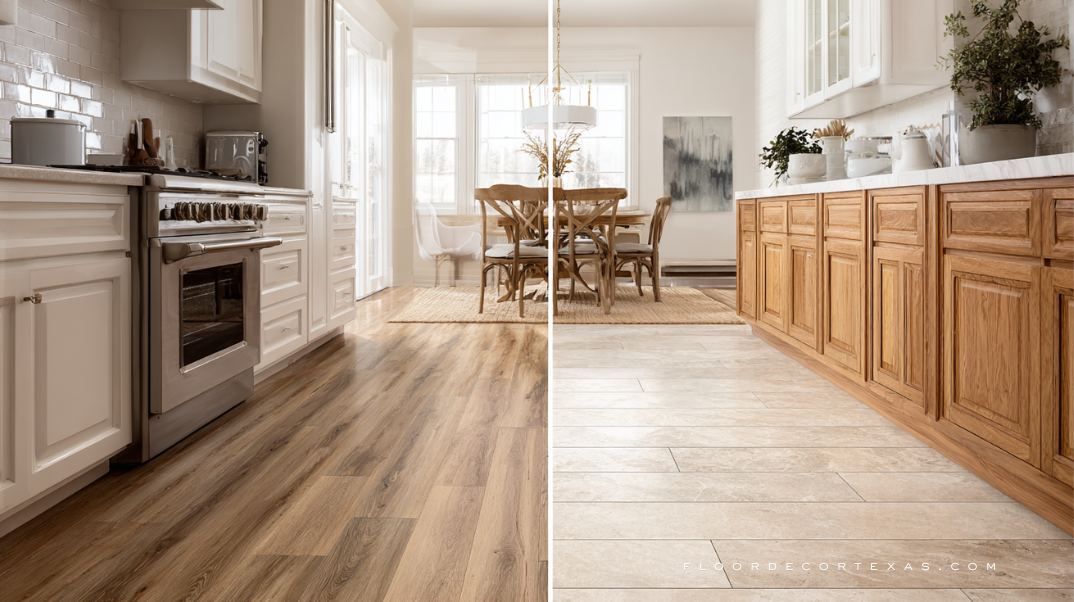 Here’s a head-to-head breakdown of LVP vs tile based on what matters most in a busy Texas kitchen:
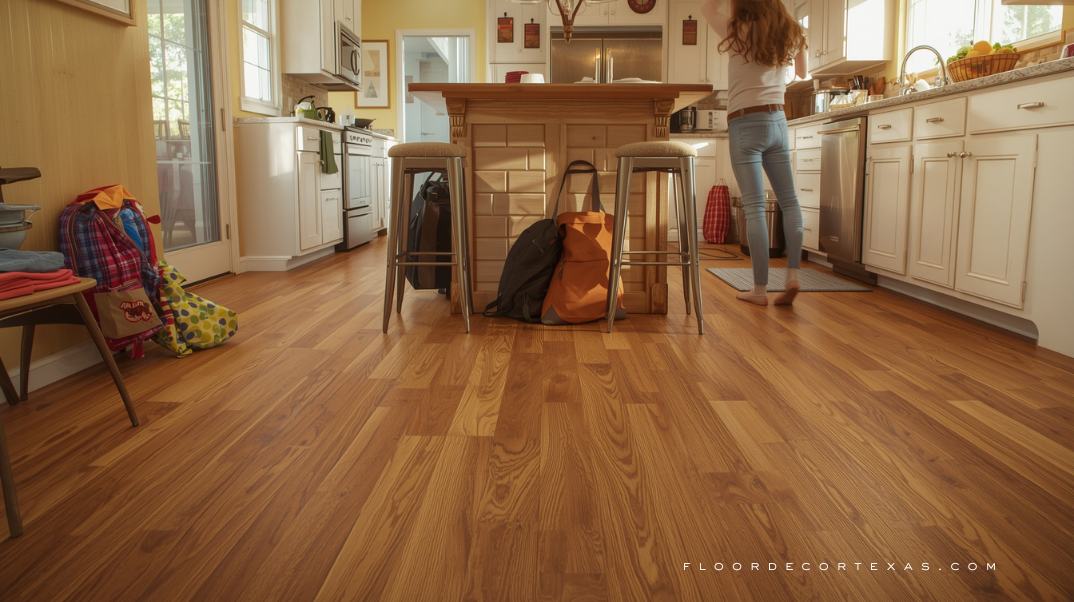 If your top priority is a quiet, forgiving floor that makes your kitchen comfortable for long cooking sessions, LVP is hard to beat. To dive deeper into vinyl characteristics, read our page on
vinyl floors.
:contentReference[oaicite:1]{index=1}
If your top priority is a quiet, forgiving floor that makes your kitchen comfortable for long cooking sessions, LVP is hard to beat. To dive deeper into vinyl characteristics, read our page on
vinyl floors.
:contentReference[oaicite:1]{index=1}