1. Your Situation at a Glance
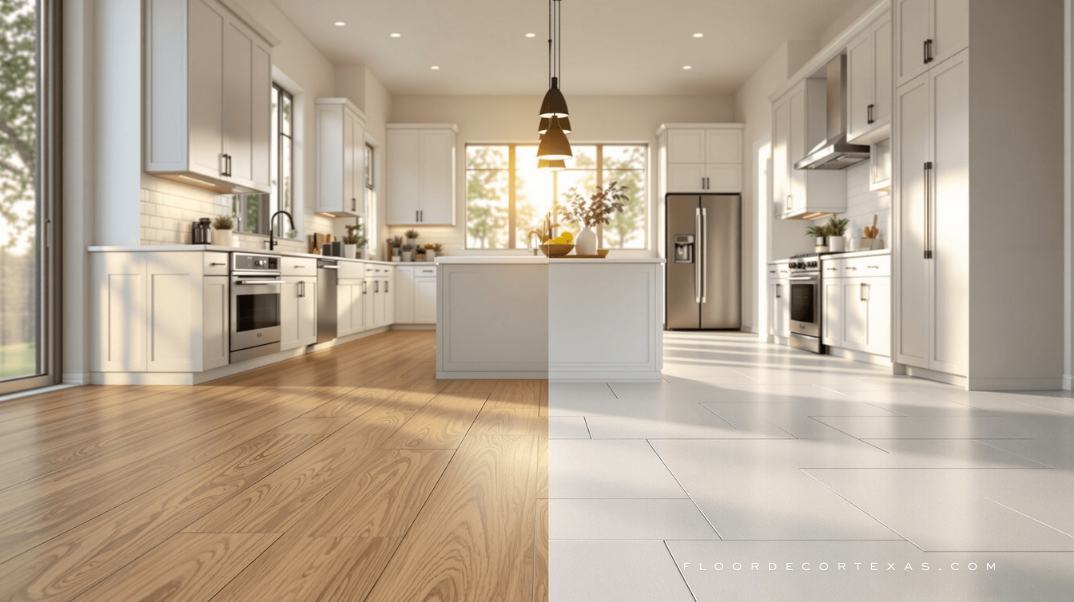
You’re a Texas homeowner remodeling a ~2,900 sq. ft suburban home with a bustling household: three teenagers, constant foot traffic, and a $60,000 kitchen remodel budget. With an estimated kitchen size of 300–320 sq. ft, both luxury vinyl plank (LVP) and porcelain or ceramic tile are financially viable.
Flooring will cost just 3–10% of your budget — but the material you choose will shape how your kitchen feels and functions for the next decade (or two).
The core question isn’t what you can afford — it’s whether you want maximum comfort (LVP) or maximum longevity and resale (tile).
2. Vinyl vs Tile: Quick Comparison for Your Kitchen
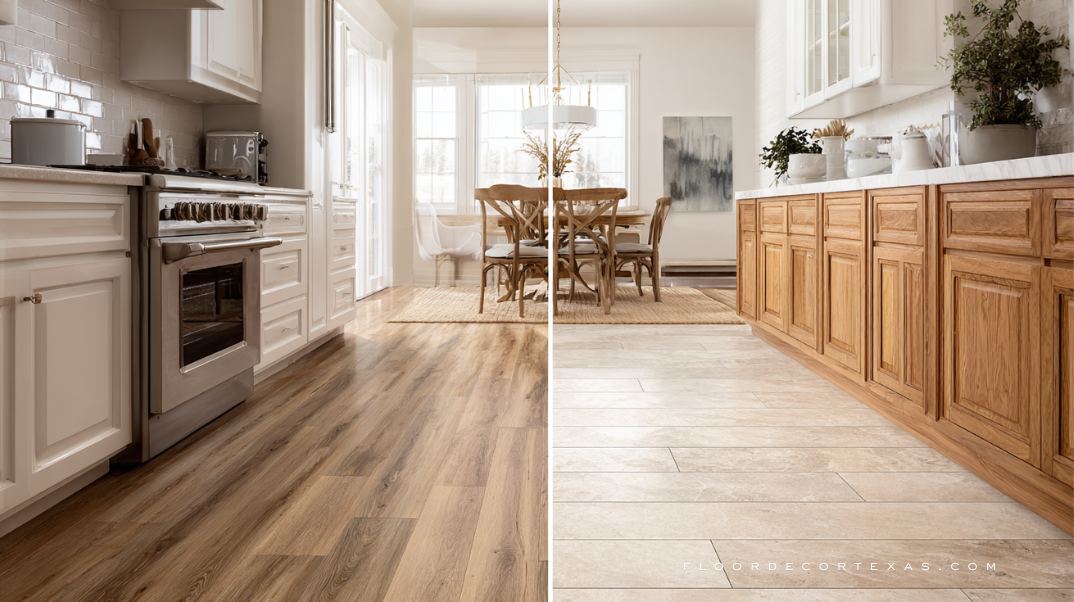
Here’s a head-to-head breakdown of LVP vs tile based on what matters most in a busy Texas kitchen:
| Factor | Luxury Vinyl Plank (LVP/LVT) | Porcelain/Ceramic Tile |
|---|---|---|
| Installed cost | $4–$11/sq. ft installed ([Best Laminate Flooring][1]) | $10–$20+/sq. ft installed ([Homewyse][2]) |
| Water resistance | Waterproof; great for spills ([Go Flooring][3]) | Excellent; porcelain is dense and non-porous ([Angi][4]) |
| Durability/lifespan | Good: 10–20 years with proper care ([Capitol Carpet & Tile][5]) | Excellent: 20–50+ years if maintained ([Angi][4]) |
| Comfort & quiet | Softer, quieter, easier on joints | Harder and louder underfoot |
| Maintenance | Simple mopping with pH-neutral cleaner; no sealing required ([Go Flooring][3]) | Easy to clean, but grout needs sealing or maintenance ([Block Renovation][6]) |
| Specs to look for | 20 mil+ wear layer; 5–8 mm thickness ([Capitol Carpet & Tile][5]) | PEI 3–4; DCOF ≥ 0.42; matte finish ([Atlas Marble & Tile][7]) |
| Resale perception | Popular but still seen as synthetic by some buyers | Viewed as a premium upgrade in most resale markets ([Block Renovation][6]) |
3. Cost in the Context of Your $60,000 Kitchen Budget
Let’s estimate flooring costs for a 320 sq. ft kitchen, assuming mid-range professional installation.
| Flooring Type | Cost per sq. ft (installed) | Estimated Total Cost |
|---|---|---|
| Luxury Vinyl (LVP) | $4–$11 | $1,300–$3,500 |
| Porcelain Tile | $10–$20+ | $3,200–$6,400+ |
Even at the high end, flooring is a small slice of your remodel. This frees up most of your budget for:
- Premium cabinets or custom finishes
- High-end quartz countertops
- Smart appliances and functional storage upgrades
The real decision isn’t just cost — it’s which experience and outcome you want long-term.
4. Option A – Teen-Proof Luxury Vinyl: Comfort, Quiet, and Style
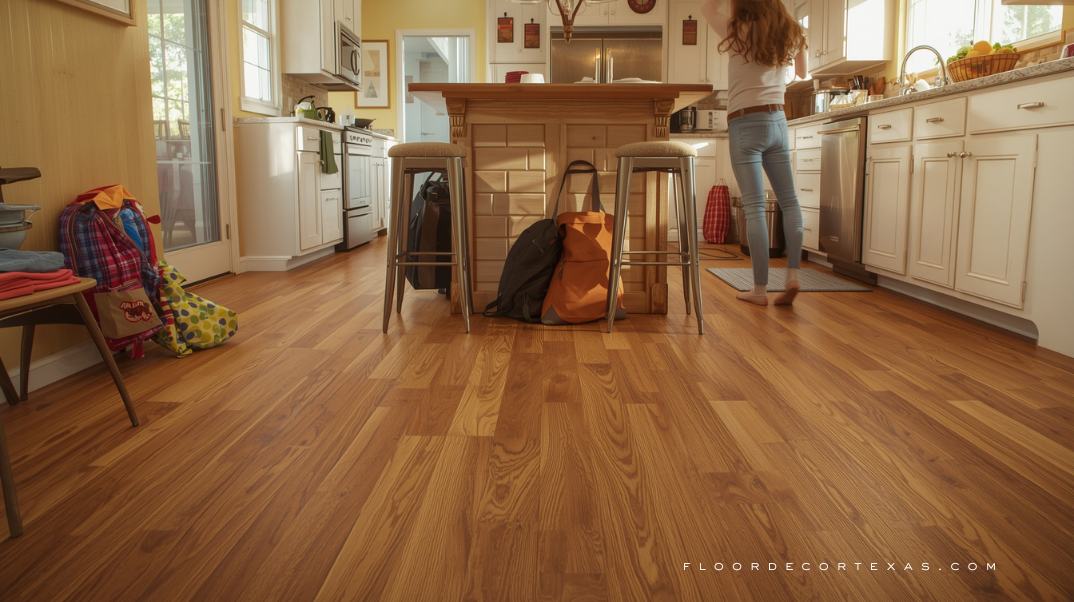
If your top priority is a quiet, forgiving floor that makes your kitchen comfortable for long cooking sessions, LVP is hard to beat.
A.1. Vinyl Specs That Work for a Busy Family Kitchen
Ask your contractor for:
- 20 mil+ wear layer (durable enough for teen traffic and dropped snacks)
- 5–8 mm total thickness for stability and comfort
- SPC core (stone-plastic composite) for better dent resistance
- Attached foam pad for built-in sound dampening
- Matte finish for easier cleaning and scratch resistance
These specs create a resilient but soft-feeling floor that works well for busy family life.
A.2. Best Colors and Styles for Texas Homes
LVP comes in realistic wood-look tones that are warmer underfoot than tile and hide daily messes well.
Great color families:
- Mid-tone oak, natural brown, or light greige
- Avoid extremes like dark espresso (shows dust) or stark white (shows grime)
Plank size:
- 7–9” wide by 48–60” long planks offer the upscale look Texas buyers expect
Bonus Tip:
Run LVP seamlessly into adjacent rooms (like family rooms or hallways) to create a large, cohesive feel — especially useful in open-concept homes.
A.3. Practical Tips for a Teen-Friendly LVP Kitchen
To extend the life and appearance of vinyl flooring:
- Use anti-fatigue mats in high-use zones (sink, stove)
- Install felt pads under chairs and barstools
- Place door mats near exterior entries to reduce grit
- Clean with vinyl-safe, pH-neutral cleaners – skip steam mops
5. Option B – Porcelain Tile: Maximum Longevity and Resale Value
Tile is the best fit if you want a “do it once, never replace it” floor that withstands heavy traffic, moisture, and time.
B.1. Tile Specs That Stand the Test of Time
Look for these tile characteristics:
- Porcelain tile (more durable and water-resistant than ceramic)
- PEI rating 3–4 for residential use
- DCOF ≥ 0.42 for slip resistance in wet kitchens
- Matte or low-sheen finish for safety and smudge resistance
- Tile size: 12″×24″ or 18″×18″ for a modern look with fewer grout lines
These features deliver a solid, upscale feel and help avoid visible wear, even in high-traffic kitchens.
B.2. Tile Colors, Grout & Long-Term Style
Best tile colors for Texas kitchens:
- Light gray, greige, or beige stone-look
- These shades hide dirt, resist fading, and match with a wide variety of cabinet tones
Grout strategies:
- Match or go slightly darker than your tile
- Consider epoxy grout if your budget allows — it resists stains and never needs sealing
B.3. Tile Comfort & Maintenance Tweaks
- Add anti-fatigue mats at the sink and stove
- Layer area rugs in nearby rooms to reduce echo
- Sweep/mop regularly, and reseal grout every few years (unless you use epoxy)
6. So, Which Floor Should You Choose?
Choose Luxury Vinyl (LVP) if:
✅ You prioritize comfort, quiet, and a softer underfoot feel
✅ You want a seamless “wood” look across kitchen and living areas
✅ You’re okay replacing it in 10–20 years
✅ You’d like to use savings for premium appliances or cabinets
Choose Porcelain Tile if:
✅ You want decades of durability with low wear
✅ Resale appeal and “forever floor” mentality matter to you
✅ You don’t mind some grout upkeep and mats in work zones
✅ You prefer a stone or concrete-look visual
Either way, you’re making a smart, durable choice.
7. Beautiful Cabinet + Countertop Combos for Both Floors

Here are plug-and-play design combinations that pair beautifully with both floor types and Texas lighting.
Combos for Mid-Tone Wood-Look LVP
| Combo Name | Cabinets | Island | Countertops | Style |
|---|---|---|---|---|
| A. Warm & Bright | Soft white | Warm greige | Quartz with soft gray or charcoal veining | Transitional |
| B. Modern Farmhouse | Greige/mushroom | Navy blue | Marble-look or warm white quartz | Casual Family |
| C. Clean Contemporary | Pale gray or white | Graphite | Solid white or concrete-look quartz | Minimalist |
Combos for Stone-Look Porcelain Tile
| Combo Name | Cabinets | Island | Countertops | Style |
|---|---|---|---|---|
| D. Cool & Durable | Soft white | Charcoal | Concrete-look or gray-veined quartz | Sleek & Modern |
| E. Warm & Timeless | Cream or almond | Walnut/oak stain | Warm white or sand quartz | Classic Texas |
| F. Moody Upscale | Mushroom/taupe | Espresso | Soapstone- or black quartz | Elegant Modern |
FAQs: Vinyl vs Tile for a Texas Kitchen
What is better for a Texas kitchen — tile or vinyl?
Both are excellent. Vinyl offers comfort and flexibility, while tile provides unmatched longevity and resale value. Climate-wise, both materials handle Texas heat and humidity well.
Is LVP really waterproof?
Yes — most rigid-core vinyl planks are fully waterproof, making them ideal for spills, teen messes, and high-traffic areas.
Does porcelain tile increase home value more than vinyl?
In most markets, yes. Tile is seen as a premium, permanent upgrade, especially in higher-end or long-term homes.
Which is easier to clean — vinyl or tile?
Day-to-day? Vinyl is easier — no grout lines. But properly sealed tile is also low-maintenance.
What flooring lasts longer — vinyl or tile?
Tile wins for long-term durability (20–50+ years). Vinyl generally lasts 10–20 years, depending on quality and use.
Conclusion: Comfort vs Longevity — Which Fits Your Family?

If you want a soft, warm kitchen underfoot, a quiet atmosphere, and more budget room for standout counters or appliances, high-quality LVP is a fantastic fit.
But if you dream of a “do it once” kitchen that lasts through teens, pets, and resale, porcelain tile delivers serious longevity with a polished look that adds value.
Next Steps
Here’s what to do next:
- Measure your kitchen footprint (~320 sq. ft) and confirm if you’ll extend flooring to adjacent rooms.
- Decide on priorities: Comfort & flexibility (LVP) or durability & resale (Tile)?
- Request product samples (LVP and tile) to compare in your home’s light.
- Talk to contractors about subfloor prep, grout types, and transitions.
- Pair your floor choice with cabinet/countertop combo A–F above for a designer-approved finish.
